
We may earn money or products from the companies mentioned in this post.
If your pet is in the room during red light therapy, keep it away from the panel’s direct light and LEDs. If you can’t keep your dog, cat, or rabbit out of the beam, use a separate room for your session.
We found no study that tested ordinary room glow during a home panel session in dogs, cats, or rabbits.
Table of Contents
What reaches pets in the room during red light therapy?
A red light panel sends most of its light forward from the LED surface. A pet lying in front of it, or staring into it, gets direct exposure. A pet napping in another corner mostly meets reflected or scattered glow.
Where your pet sits in the room during red light therapy matters as much as how far away it is. A dog across the room can still lie in the panel’s line of light, and a curious cat can walk right up to the panel.
| Situation | What it means | What the located evidence shows |
|---|---|---|
| Direct exposure | The working panel lights your pet’s eyes or body | No pet study of consumer panels found, so avoid it |
| Indirect room glow | Reflected or scattered light elsewhere in the room | Not measured for pets; not shown to be harmless or harmful |
| Veterinary treatment | A vet aims a device at a chosen body area with set settings | Treatment research, not bystander safety evidence |
Turning off near-infrared doesn’t settle the question
Many panels pair visible red light with near-infrared light, which you can’t see. Hooga’s PRO1500 is one example. It lists 660 nm red and 850 nm near-infrared light, with channels you can switch on separately.
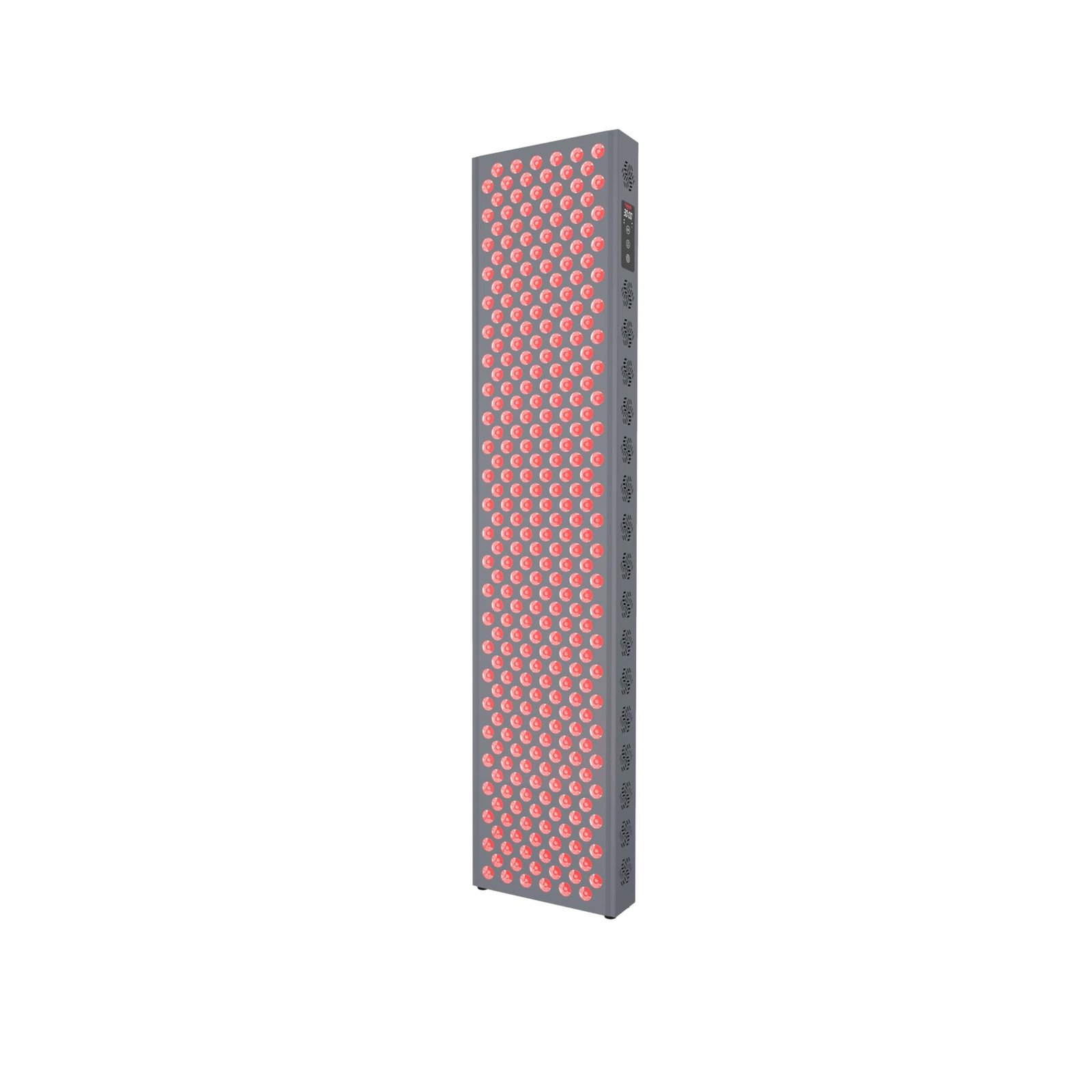
For background on how the two differ, see our guide to red and near-infrared light. No source we found shows that red-only mode makes room-sharing safe for pets.
The International Commission on Non-Ionizing Radiation Protection (ICNIRP) published an LED safety statement in May 2020. It says risk depends on the light source and the exposure conditions. Neither the word “LED” nor a single wavelength proves that a given exposure is safe.
Your panel’s own instructions come first
Follow the safety instructions for your exact panel. Human-use instructions do not establish safe exposure levels for pets.
What to look for in the panel manual
Start with the model number printed on the unit. Manufacturers can sell several panels under one series name, and a quick-start sheet for a different size may show a different mount or control layout. Find the sections for eye precautions, placement, and airflow. If you use a tabletop device or a stand with an adjustable tilt, also check the manufacturer’s instructions for securing it at the angle you intend to use.
Separate the instructions written for your session from evidence about your pet. A recommended operating distance tells the person using the device where to stand for its intended use. It cannot tell you where an animal can safely rest. Likewise, eye protection supplied with a panel is intended for the user under the manufacturer’s instructions. Its presence or absence tells you little about a dog, cat, or rabbit nearby.
Product pages sometimes show an irradiance number at a specified distance. That number describes the light arriving at a particular measurement location under the conditions used for the test. A pet entering from the side, looking up at the device, or moving toward it changes the exposure scenario. The specification can help you compare panel documentation, but it cannot substitute for an exposure study in the animal and setting you care about.
If you contact the red light therapy manufacturer, ask a narrow question about your model. For instance, ask whether the manual addresses pets nearby while the device is running, or whether it only describes the person using it. Ask for the specific page or written guidance if the answer is unclear. Treat any reply as advice about that manufacturer’s equipment. For questions about your own animal’s eyes or a suspected exposure, contact your veterinarian.
What pet research shows for dogs, cats, and rabbits, and what it leaves out
Our source review found no study of dogs, cats, or rabbits sharing a room during an owner’s panel session. That’s the result of a limited search, not proof that no such study exists. We found no tested safe distance or session length for pets sharing the room.
Dogs: vet studies test treatment, not bystanders
A 2022 trial in the American Journal of Veterinary Research studied 20 dogs with hip osteoarthritis. A Class IV therapeutic laser was applied to selected joints. The trial didn’t test home panels, cats, rabbits, or pets sitting nearby.
The Merck Veterinary Manual lists retinal injury and thermal burns as risks of improperly applied laser therapy. Those warnings cover misused lasers, not measured risks from a household LED panel’s glow.
So “vets use light therapy” answers a different question. In a clinic, the vet controls the device, the dose, the target area, and the animal’s eyes.
Cats: no specific evidence located
We didn’t find any cat-specific source on incidental panel exposure. Results from dog treatment studies don’t automatically apply to cats.
Rabbits in fixed enclosures
A rabbit in a fixed enclosure cannot choose to move to another room. If the enclosure is in the panel’s path, move your session to another room.
How to set up a session so your pet stays out of the light
These are sensible precautions, not tested pet exposure protocols.
- Aim the panel away from pet beds, crates, and favorite resting spots.
- Close the door or use a pet gate if your animal tends to wander over to you.
- Give a free-roaming pet a separate, comfortable space if you can’t watch it the whole session.
- Keep cords, stands, and mounting hardware out of reach so pets can’t chew, pull, or tip them.
- Don’t cover a running panel to block the light, since that can block its ventilation.
- Skip homemade eye covers for your pet.
Caged pets need extra thought. A rabbit in a fixed enclosure can’t move away from the light, so move your own session to another room rather than assuming the rabbit will be fine.
A pet that seems to enjoy lying near the panel isn’t proof of safety. Your pet looking away doesn’t prove anything either, because comfort isn’t a tested eye-safety check.
Three setup mistakes to avoid
1. Planning around where your pet usually sleeps. Think about where it can go during the session. If a dog gets up to greet you, it may cross the front of a low panel. If a cat can jump onto a chair beside a tabletop panel, the chair changes the route it can take. Set up a physical separation before you start if you expect either animal to follow you. A different room is easier to manage than trying to monitor an animal while your back is to the door.
2. Using the red glow as a map of exposure. The patch of visible light on a wall can help you see roughly where the panel is pointing, but it cannot show everything a near-infrared channel emits. Think about the face of the panel, its tilt, and the path ahead of it. If you change from standing to sitting, or tilt the device down for a different body area, recheck the setup before starting.
3. Trying to block the light with an improvised cover. A blanket over the running panel can obstruct its ventilation. A loose screen or chair may give a cat another place to climb. Use the room layout to separate your pet from the session and keep the device uncovered, mounted securely, and set up according to its instructions.
Example: a low panel in a living room
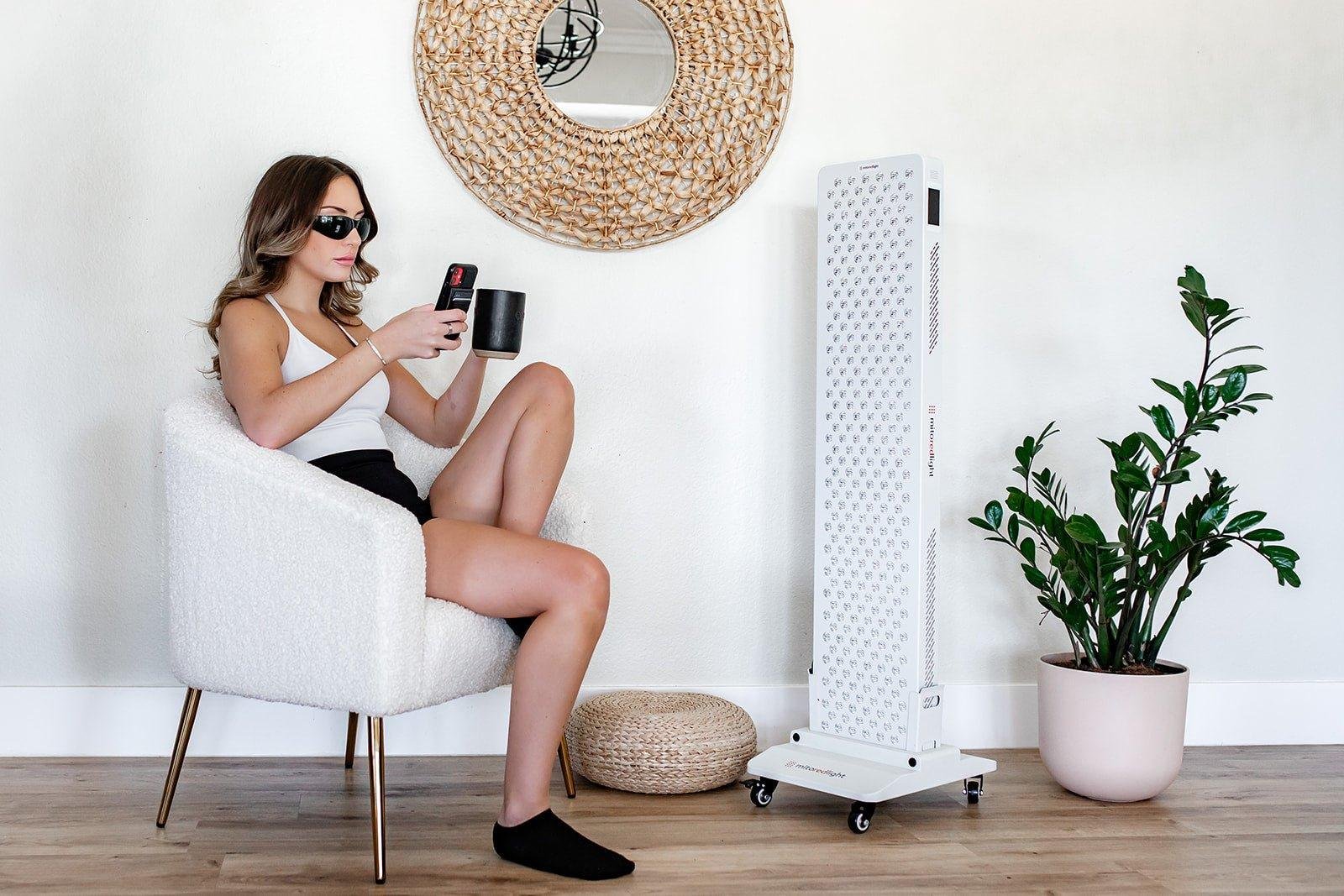
Say you use a floor-mounted panel beside the couch and your dog normally lies near the coffee table. Before turning it on, look from the panel’s position and consider the route between the dog bed, doorway, and couch. A bed off to the side helps only while the dog stays there. If the dog walks up to you, you need a setup that keeps that route outside the session area or a separate place for the dog to rest.
Now move the same panel a few feet and rotate it to face a wall instead of an open doorway. The useful change is where the panel points and who can reach it. The move does not establish a safe distance. Recheck the stand and cable after moving the device, especially if the cable would now cross a path the dog uses.
Example: a desk panel in a home office
A panel on a desk may sit above a dog but still be reachable by a cat. Look for chairs, shelves, and windowsills that give the cat a route to the desk. If the cat is in the room during red light therapy and regularly jumps up for attention, a closed door is a more predictable way to keep it out of the setup than expecting it to stay on the floor.
If you share a small office and cannot shut the door, you can change the timing of the session. Use a time when someone else is with the pet, or move your session to a room you can close. Avoid relocating a heavy stand while it is switched on or while pets are underfoot. Make the arrangement easy enough that you can repeat it without improvising each time.
Example: a rabbit enclosure in a shared room
Start by mapping the enclosure and the panel together. A rabbit resting in a hide has less room to choose where it sits than a dog roaming the house. If you normally face the enclosure while standing at the panel, changing how you stand is less reliable than taking the session to a room away from the enclosure. A separate room also avoids having to repeatedly move the rabbit’s food, water, and resting area around your routine.
If a rabbit is normally free-roaming, set up the boundary before switching on. Make sure it also keeps the rabbit away from cables and the base of the stand. A screen placed just to hide a bright spot does not solve access to equipment behind it. If you cannot manage both issues, choose a different session location.
A quick household check before you switch on
First check who can enter. If family members use the same room, let them know the door needs to stay closed during the session so a pet does not slip in. Check the surface or stand and route the power cord where pets cannot reach it. Read the instructions for the exact model, especially if you adjust the mount or use a different angle for another session.
Then check how you will stop the session. Keep the controls accessible without stepping across cords or leaving a running panel unattended. If a pet gets into the room during red light therapy, turn the unit off before guiding the animal away. Reset the barrier or change rooms before you restart.
What to do if your pet wanders into the light
Switch the panel off or turn it away, then guide your pet out of the area. Afterward, change your setup so it doesn’t happen again.
Watch your pet’s eyes afterward. VCA Animal Hospitals lists squinting, holding an eye closed, strong redness, discharge, or cloudiness as signs that need prompt vet care. These are general eye-problem signs, so tell your vet what happened rather than assuming the panel caused them.
What to tell your veterinarian
If you call about a possible eye exposure, have the product name and model ready. Explain whether the pet looked at the LEDs, was simply in the room during red light therapy, or was close enough that you could not tell. Describe the device mode, the approximate time involved, and what you noticed afterward. Those details give the clinic a clearer picture than simply saying the pet was near red light.
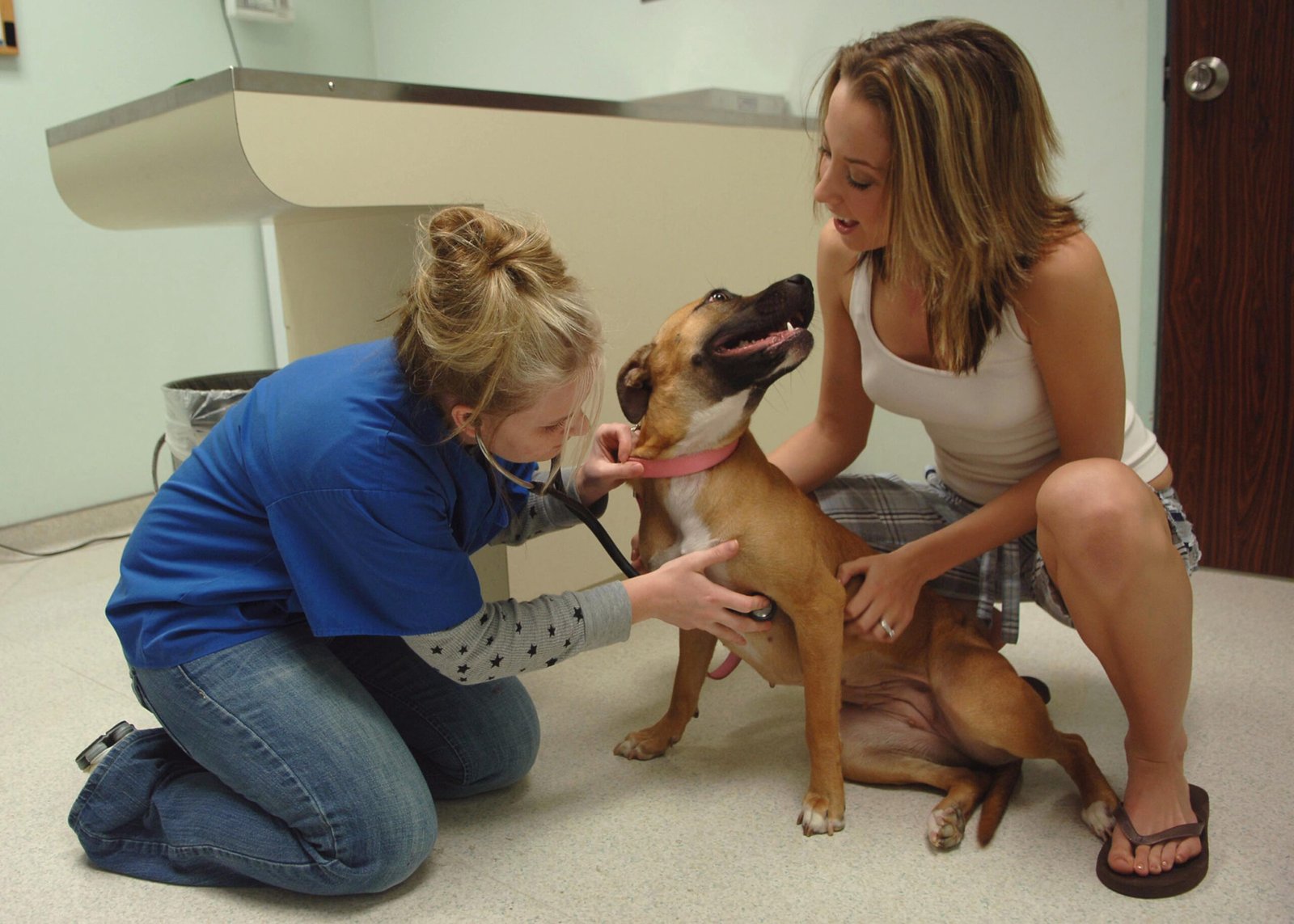
If you have the manual or a photo of the setup, keep it available in case the clinic asks for more details. Follow the clinic’s instructions for your animal and mention any known eye condition. The photo above shows a routine veterinary exam and does not depict a light exposure or its treatment.
FAQs about pets in the room during red light therapy
Can my pet stay in the room if it’s outside the direct light?
Maybe, but no study we found confirms that setup is safe for every panel or species. If you can’t keep your pet out of the beam, a separate room is the simplest choice.
Do dogs or cats need goggles just to share the room?
Our research found no pet goggle standard for this situation. Keeping your pet out of the light is more practical than eyewear, so ask your vet before trying any.
Is there a proven safe distance from a red light panel?
No. We located no tested safe distance for pets, and light spread varies from one device to another.
What if my pet looks straight at the panel?
Turn the panel off or away, and move your pet. Then watch for the eye signs listed above, and call your vet if any appear.
Can I use my panel to treat my dog instead?
That’s a separate decision, and it starts with your veterinarian. Our guide to red light therapy for dogs covers what treatment research shows.
What the evidence means for dog, cat, and rabbit owners
If your pet wanders into the room during red light therapy, switch off the panel before moving it. Until better evidence appears, keep pets out of the light, and use a pet-free session room when you can’t.

About the author: Mike Tolentino founded Red Iron Peak. This article draws on published veterinary research, device documentation and optical safety guidance.