
We may earn money or products from the companies mentioned in this post.
Home red light therapy panels range from under $800 to well over $1,500, and the spec sheets can look confusing. This guide compares five options among the best red light therapy devices for home use by published specifications, price and coverage. We have not tested these panels; the picks below reflect those buying criteria, not measured treatment results.
Quick Answer: Our Top Picks
- Best overall: Mito Red Light MitoPRO 1500X
- Best value full-body panel: Hooga PRO1500
- Most wavelengths: PlatinumLED BioMax 900
- Best premium brand and app: Joovv Solo 3.0
- Lowest listed price / targeted use: ATaPa ATHENA
In this guide
Best Red Light Therapy Devices Compared
| Device | Approx. price | Wavelengths | LEDs | Warranty | Best for |
|---|---|---|---|---|---|
| Mito Red Light MitoPRO 1500X | About $1,299 | 590, 630, 660, 810, 830, 850 nm | 300 | 3 years | Best overall |
| Hooga PRO1500 | About $1,199 | 660, 850 nm | 300 | 3 years | Value, full body |
| PlatinumLED BioMax 900 | About $1,299 | 7-band spectrum; confirm configuration | 300 | 3 years | Most wavelengths |
| Joovv Solo 3.0 | $1,699 | 660, 850 nm | 150 | 2 years | Premium, app control |
| ATaPa ATHENA | $780 | Conflicting descriptions; confirm exact wavelengths | 60 | 2 years | Budget, targeted |
For this best red light therapy devices comparison, prices are list prices we found in October 2026 and change often, with sales and bundles common. Joovv and ATaPa prices come from their own product pages. Mito, Hooga, and PlatinumLED prices were checked against their manufacturer listings on October 24, 2026. Wavelengths, warranty, and return terms come from the brands’ official pages. Always check the current price before you buy.
1. Mito Red Light MitoPRO 1500X: Best Overall
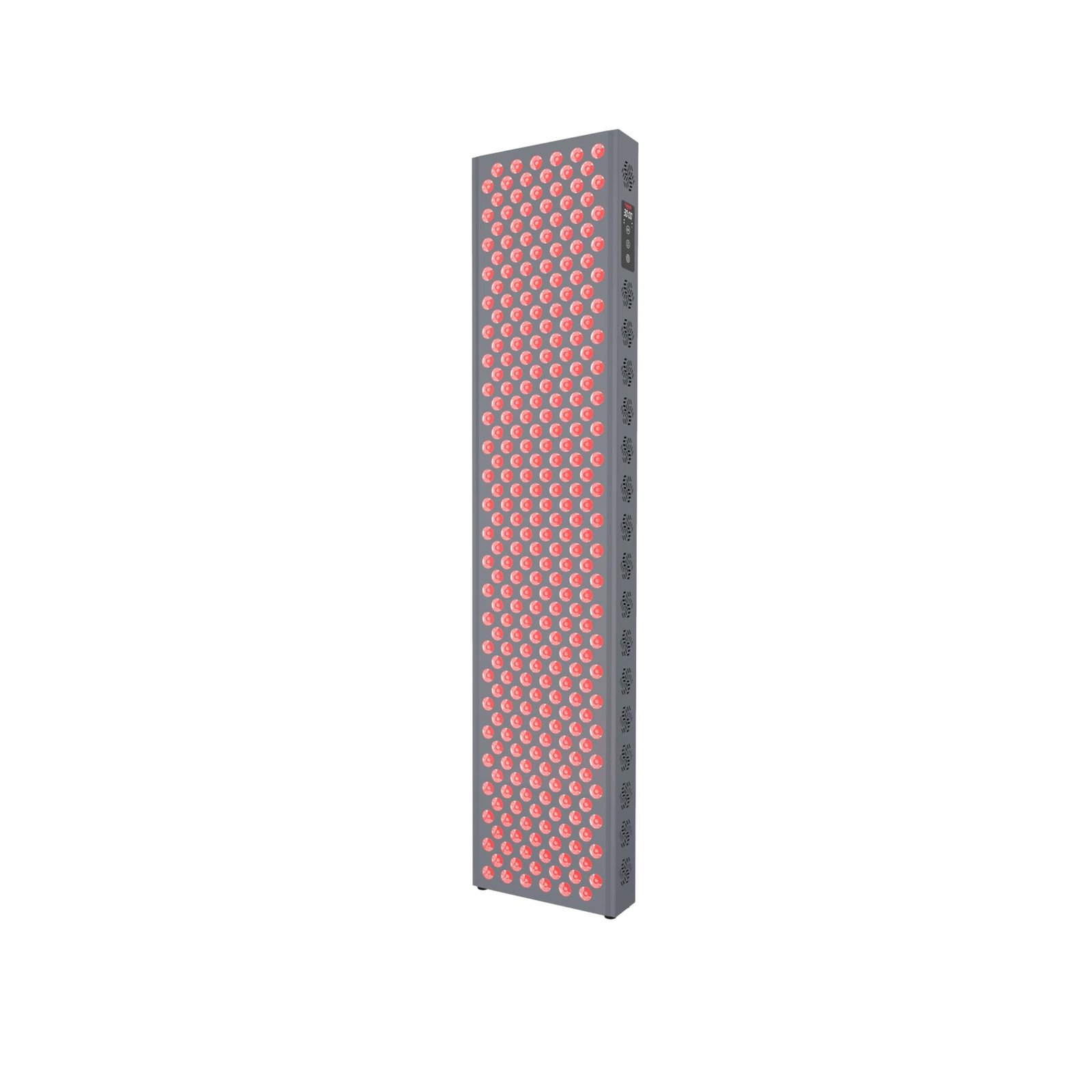
The MitoPRO 1500X is a tall, full-body style panel with six wavelengths, 300 LEDs, a touchscreen, and Bluetooth app control. Mito lists it as an FDA Class II registered device with a 3-year warranty and a 60-day money-back guarantee, plus free US shipping. Its combination of app controls, multiple wavelengths and warranty earns our overall pick on paper. FDA registration alone does not establish clearance or approval for broad health claims.
MitoPRO X manufacturer specifications
Pros
- Six wavelengths from 590 to 850 nm
- Touchscreen, brightness control, and app
- 3-year warranty and 60-day returns
- Modular, so you can add panels later
Cons
- Mito’s range is large, so prices and model names can be confusing
- Not the cheapest full-length panel
- A tall panel needs enough floor or mounting space
2. Hooga PRO1500: Best Value Full-Body Panel
Hooga keeps things simple: 300 dual-chip LEDs, 660 nm red and 850 nm near-infrared, and a built-in timer and digital controls so you can run red, near-infrared, or both. Hooga’s site lists a 3-year panel warranty and 60-day returns (return shipping is deducted from the refund). At the listed prices in this comparison, it costs less than the MitoPRO 1500X, BioMax 900 and Joovv Solo 3.0.
Pros
- Lower price for a full-length panel
- The two core wavelengths, 660 and 850 nm
- 3-year warranty and 60-day returns
- HSA/FSA eligibility offered through TrueMed
Cons
- Only two wavelengths
- No app control or pulsing on this model
- Basic feature set
3. PlatinumLED BioMax 900: Most Wavelengths
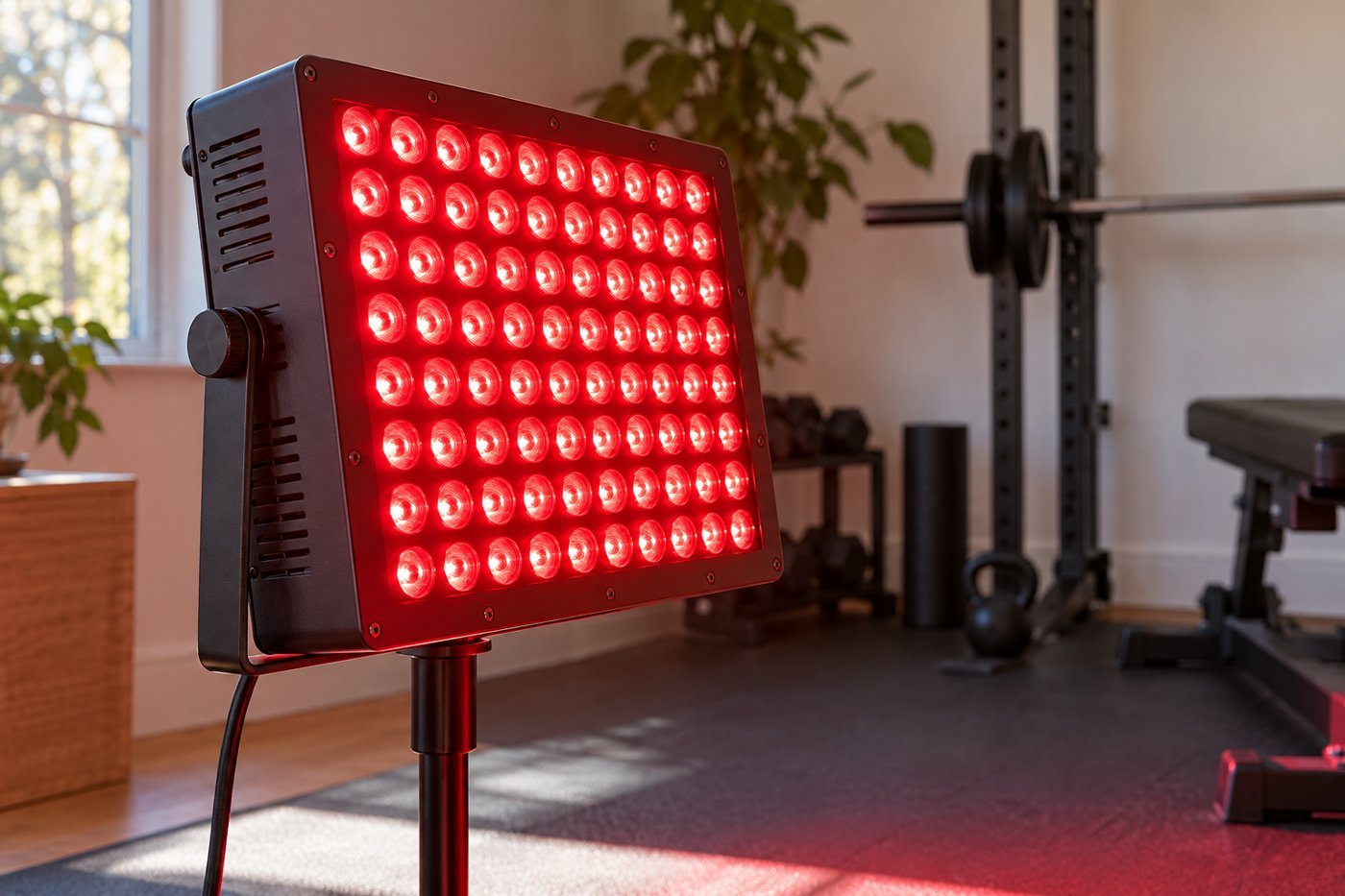
The BioMax 900 is marketed with a seven-band spectrum, the largest advertised wavelength count among these five models. Check the current generation’s specification sheet before purchase. PlatinumLED says its lights are ETL certified to IEC 60601, are Class II medical devices, and have third-party verified irradiance testing. They offer a 3-year warranty. The brand has also released a newer BIOMAX PRO line, so check which generation you are buying.
PlatinumLED BIOMAX series details
Pros
- Seven wavelengths
- Third-party verified irradiance, per the brand
- 3-year warranty
- Modular design for multi-panel setups
Cons
- Heavier than most rivals
- Cooling fans are part of the design; we have not measured noise
- The app and professional remote are optional extras
- Newer BIOMAX PRO models exist at a higher price
4. Joovv Solo 3.0: Best Premium Brand and App
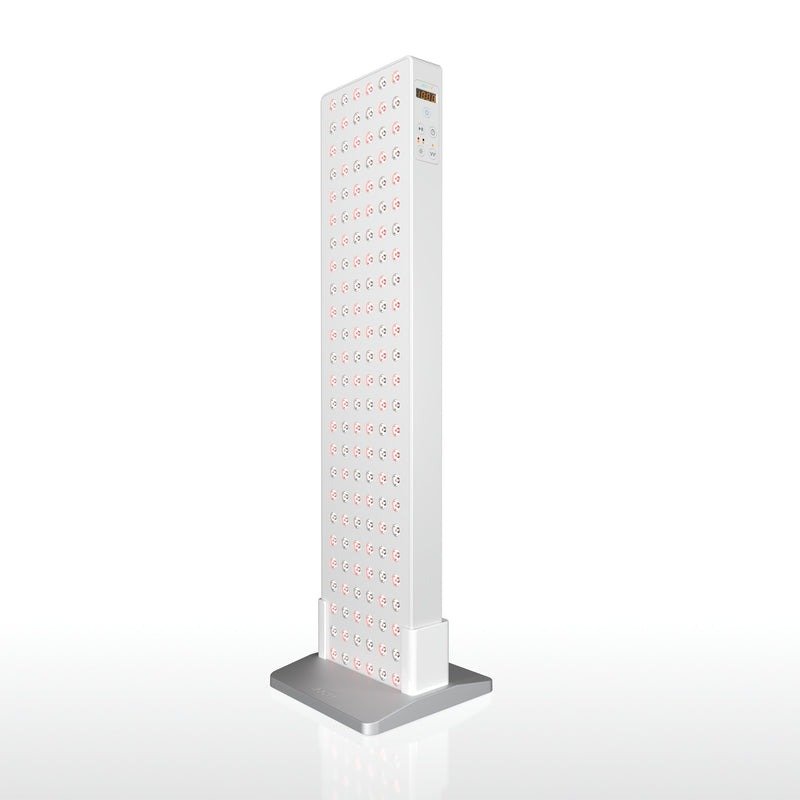
The Joovv Solo 3.0 is part of the brand’s modular panel system. It lists at $1,699, with 660 and 850 nm wavelengths, 150 LEDs, a polished Bluetooth app, pulsed Recovery+ mode, and a modular system. Joovv backs it with a 2-year warranty. You pay a clear brand premium, so it makes the most sense if app control and expandability matter more than the lowest upfront price. Read our full Joovv Solo 3.0 review for details.
Joovv Solo 3.0 product details
Pros
- Polished app with session tracking
- Pulsed Recovery+ mode
- Safety testing to medical electrical standards, per Joovv
- Light and easy to expand
Cons
- Highest price on this list
- Only two wavelengths
- Fewer LEDs than the full-length rivals
- Shorter warranty than Mito, Hooga, and PlatinumLED
5. ATaPa ATHENA: Lowest Listed Price and Targeted Pick
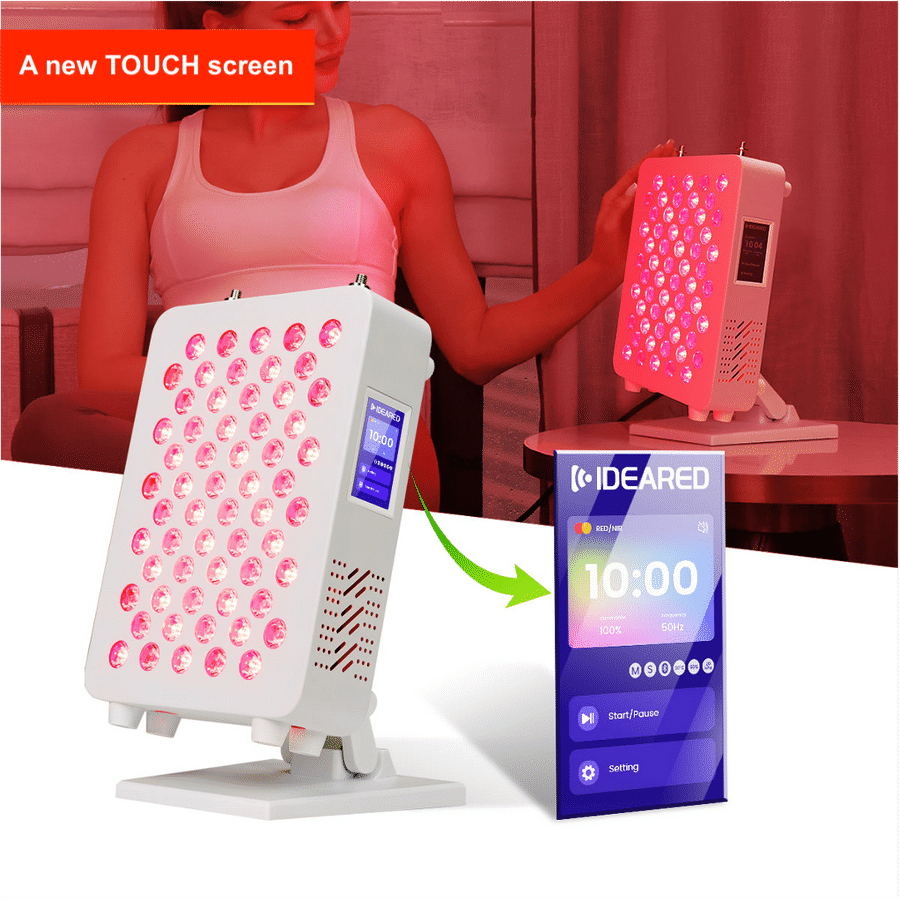
The ATHENA is a small, travel-size panel with a touchscreen and 60 LEDs. Its product page lists five wavelengths in one section and 660/850 nm in another, so confirm the exact configuration before buying. ATaPa lists it at $780 and publishes its own irradiance claims. We have not verified those measurements, which should not be compared directly with differently tested panels. It comes with a table stand, goggles, and a remote, plus a 2-year warranty. It is built for targeted areas, not full-body sessions, so you would need to move it around.
Pros
- Lowest price on this list
- Touchscreen controls; confirm the conflicting wavelength descriptions
- Compact and easy to move
- Timer, remote, goggles, and stand included
Cons
- Small coverage area (about 11 x 8 inches)
- Only 60 LEDs
- Not suited to full-body sessions
- The US plug version has shown as sold out
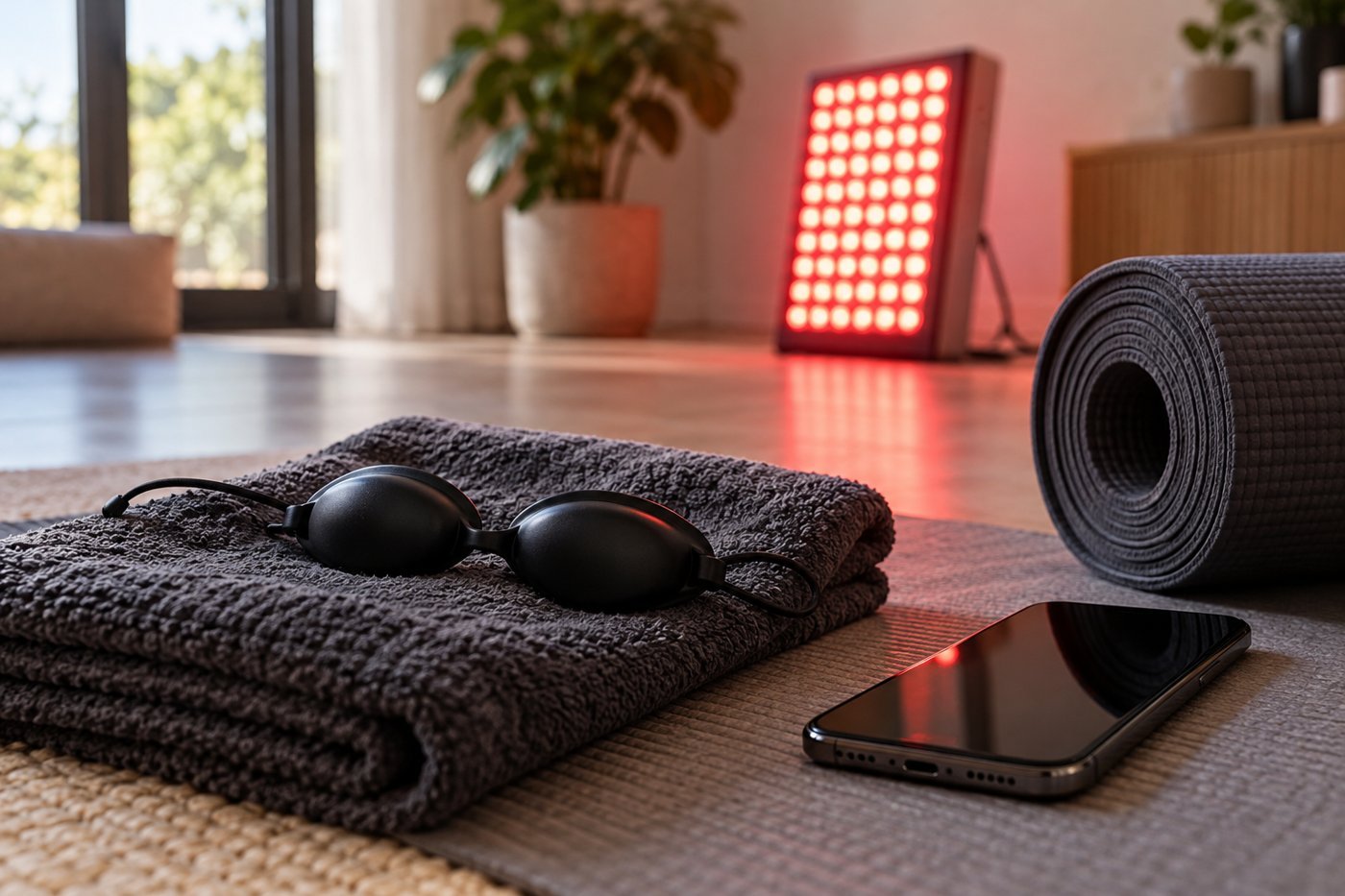
How to Choose the Best Red Light Therapy Devices for Your Setup
- Decide on coverage. A small panel suits the face, joints, or one area. A tall panel covers more of your body in one session.
- Check wavelengths. Almost every panel offers 660 nm red and 850 nm near-infrared. More wavelengths alone do not establish better results.
- Look at safety and testing. Look for recognized electrical safety certification and, ideally, independent irradiance testing, not just the brand’s own claims.
- Compare warranty and returns. A 60-day trial and a multi-year warranty lower your risk.
- Think about features. App control, pulsing, and brightness settings are nice but add cost.
Best Red Light Therapy Devices: What to Check Before Ordering
A shortlist of the best red light therapy devices should help you compare complete purchases, not just headline specifications. Record the exact model, generation, mounting option, delivered price, return conditions and warranty. An included stand can change the comparison, and a specification from another generation should not be treated as a feature of the unit in your cart.
Decide where the panel will go before choosing its size. Check the manufacturer’s dimensions, mounting instructions and operating guidance for that space. A compact panel and a tall panel solve different practical problems. Their presence on the same list of best red light therapy devices does not make their coverage or intended setup equivalent.
Separate convenience from evidence. A touchscreen, app, timer or pulsing option may make a device easier to fit into your routine, but its presence alone does not establish better treatment outcomes. Likewise, a longer list of wavelengths cannot settle which of the best red light therapy devices will deliver better results for your particular goal.
Finally, check commercial terms directly. Confirm whether return shipping, original packaging, accessory exclusions or other conditions apply. A warranty and a return window address different issues, and neither is evidence that a panel will produce the outcome you want. We compare the best red light therapy devices here using published features and buying terms; we have not tested those outcomes.
Safety Notes
Use eye protection, especially with near-infrared light, and never stare into the LEDs. These devices are sold for general wellness and, in some cases, for temporary relief of minor muscle and joint pain. They are not intended to diagnose, treat, cure, or prevent disease. If you are pregnant, take medication that makes you sensitive to light, or have a medical condition, check with your doctor first.
Matching the Best Red Light Therapy Devices to Your Space
The best red light therapy devices for one household may be an awkward fit in another. Start by separating three practical setups: a compact panel used for a limited area, a larger panel that stays in one place, and a modular system intended for later expansion. These are purchasing categories, not claims about which configuration produces better treatment results. The right shortlist depends on the space available and the type of setup you are prepared to maintain.
For a compact setup, check the panel dimensions and the supplied stand before focusing on wavelength totals. A lower headline price can be appealing, but coverage and positioning still matter. The ATHENA is the smallest option in this particular comparison; it should not be treated as a direct coverage equivalent to the taller panels. Its conflicting wavelength descriptions also need clarification. Portability and a touchscreen are visible buying features, while the exact wavelength configuration is an unresolved specification.
For a larger panel that will remain in place, compare the complete mounting arrangement. Think about where it will be stored, how its controls will be reached, and whether the surrounding area allows the placement described in the instructions. A product can have an appealing specification sheet yet be inconvenient in the room where you actually plan to use it. Checking those details first can eliminate an unsuitable option without needing to rank every advertised technical feature.
For a modular setup, define the eventual configuration before comparing starting prices. Ask which panels and accessories are compatible, what the final mounting arrangement requires, and whether the quoted price includes the components shown. The best red light therapy devices for an expansion plan are not automatically the cheapest devices to buy one at a time. Compare a complete planned configuration against the staged route and verify compatibility directly with the manufacturer.
Best Red Light Therapy Devices: Compare the Complete Purchase
Create a separate total for each exact model and configuration. Begin with the panel price, then add the mount or stand, necessary accessories, shipping and taxes that apply to your order. Use the final checkout configuration rather than a promotional starting price. If a manufacturer offers several generations under similar names, record the generation as well as the product family. This keeps a newer specification from being accidentally paired with an older model’s price.
Commercial terms belong beside that total. Record the return window, when it begins, which conditions apply and who pays any relevant shipping charges. Then record the warranty and what it covers. These columns answer different questions. A return window concerns the ability to return the purchase under stated conditions; a warranty concerns specified problems during its coverage period. Neither column establishes that the product will deliver a particular treatment outcome.
A comparison of the best red light therapy devices is more useful when uncertainty remains visible. If a specification conflicts across a brand’s pages, mark it as unresolved rather than selecting the more impressive number. If an output figure lacks a measurement distance or method, keep it out of a direct numerical ranking. If a package includes optional accessories in its photographs, confirm which ones are in the quoted configuration. Missing information is a reason to ask, not a reason to guess.
Use the same comparison rules for every brand. Do not reward one panel for app controls while treating those controls as irrelevant on another, or compare one manufacturer’s full setup against another’s bare panel price. The choices in this best red light therapy devices guide are based on different practical priorities, which is why the overall pick, lower-priced large panel and compact option can be different products without any one of them being best for every reader.
A Simple Shortlist Worksheet
Before ordering, write down the task the setup needs to fit, your available space, your maximum complete purchase price and the features you will actually use. Choose two or three candidates from this guide and fill in those details from the current manufacturer pages. Put any unanswered question in a separate column. This gives you a specific request to send the seller instead of trying to infer an answer from general marketing language.
When two options remain close, decide which documented difference matters most to you. It may be a mounting arrangement, control preference, expansion plan or commercial term. More advertised features are not automatically more useful features. The best red light therapy devices shortlist should make the decision clearer by connecting each feature to your own setup, while keeping clinical claims and unverified measurements separate from that practical comparison.
Best Red Light Therapy Devices: Final Verdict
Among the best red light therapy devices compared here, the MitoPRO 1500X is our on-paper pick for its mix of features, warranty and listed price. If you want a full-length panel for less, the Hooga PRO1500 is hard to beat. Choose the BioMax 900 for the widest wavelength range, the Joovv Solo 3.0 for brand polish and app control, and the ATaPa ATHENA if you want a low-cost, portable panel for a single area.
Frequently Asked Questions
What are the best red light therapy devices for home use?
Our comparison of the best red light therapy devices favors the MitoPRO 1500X for its published feature set, warranty and listed price; this is not a clinical-effectiveness ranking. The Hooga PRO1500 is better if you want to spend less, and the ATaPa ATHENA is the cheapest option for targeted use.
Do I need more than two wavelengths?
Not necessarily. Most panels deliver 660 nm red and 850 nm near-infrared, which are the most commonly used wavelengths. When comparing the best red light therapy devices, extra wavelengths add settings to assess; the count alone does not prove greater effectiveness.
Can I use an HSA or FSA card?
Several brands, including Joovv, Hooga, and Mito, say they accept or support HSA/FSA payment. Eligibility depends on your plan, so confirm with your provider.
Is a bigger panel always better?
No. The best red light therapy devices for a larger treatment area may differ from those suited to one small area. A bigger panel covers more area in one session, but size alone does not establish better results. Pick the size that matches how you plan to use it.
Sources and How We Chose
Our best red light therapy devices guide is a research-based comparison of five selected panels, not an exhaustive market ranking or a hands-on test. We favored features and warranty for the overall pick, listed price among the larger panels for value, and compact size for targeted use. Specifications and commercial terms are manufacturer statements checked October 24, 2026; confirm the selected model, stock, mounting costs and return conditions before ordering. No treatment outcomes or irradiance measurements were independently tested. The labeled conceptual illustrations are AI-generated. Product photographs of the Solo 3.0 and ATHENA come from their manufacturers; none represents our own hands-on testing.
- MitoPRO X manufacturer specifications
- Hooga PRO1500 product details
- PlatinumLED BIOMAX series details
- Joovv Solo 3.0 product details
- ATaPa ATHENA product details
About the author: Mike Tolentino, Red Iron Peak. This is a research-based buying guide, not a hands-on test. Manufacturer claims and independent evidence are identified in the article. Editorial transparency update: October 27, 2026; product source-check dates are stated separately.