
We may earn money or products from the companies mentioned in this post.
You do not need a full-body panel to use red light on your face. Small panels cost less and fit on a desk or counter. But the marketing around them is full of big claims, and the research behind those claims is thinner than it looks. This guide compares four compact red light therapy devices for face use, then explains what the studies actually show. If you are also weighing larger panels, see our guide to the best red light therapy devices.
The Short Version
- No independent clinical trial of any of these four exact panels was found.
- Trials of other red and near-infrared devices show modest, short-term improvements in some wrinkle measures. Results are mixed.
- The Hooga HG300 has the lowest price ($199). The Joovv Mini 3.0 offers app controls and manufacturer-reported electrical safety certification. ATaPa and Mychondria have documentation questions discussed below; those gaps do not establish that a device is ineffective.
Disclosure: RedIronPeak earns a commission if you buy through our Hooga or Mychondria affiliate links. This does not affect how we assess the evidence.
In this guide
Red Light Therapy Devices for Face Compared
| Feature | ATaPa ATHENA | Hooga HG300 | Joovv Mini 3.0 | Mychondria MIDI 2.0 |
|---|---|---|---|---|
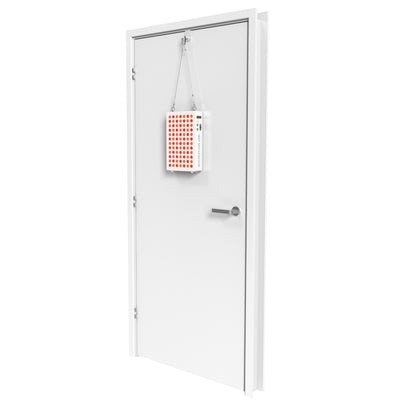
| List price (Oct 2026) | $780 | $199 | $1,099 | $1,099.95 (door) / $1,349.95 (foot stand) |
| Wavelengths (company claim) | Page conflicts: 660 + 850 nm, or 630 to 850 nm | 660, 850 nm | 660, 850 nm | 630, 660, 850 nm (1:1:2) |
| LEDs | 60 | 60 | 60 | Not reported |
| Size | 11.2 x 8.2 x 2.5 in | 12.2 x 8.2 x 2.5 in | 14.75 x 8.75 x 2.34 in | 13.2 x 8.7 x 2.8 in |
| Weight | Not reported | About 6 lb | About 7 lb | 8.8 lb |
| Controls | Touchscreen, timer, remote | Switches, timer | Bluetooth app | Not reported on product page |
| Warranty | 2 years | 3 years | 2 years | 10 years for manufacturing faults; 2 years for accessories under the refund policy |
| Return window | Check ATaPa’s policy | 60 days, return shipping deducted | Check Joovv’s returns page | 60 calendar days from delivery; accepted returns receive a company-paid label |
All specs are the manufacturers’ own claims, taken from their product pages. We did not test these red light therapy devices for face use. Prices change often, so check the current listing.
What the Research Shows
Research on red light therapy devices for face use raises two separate questions: does red light work on skin in general, and does this particular panel work? The first has some studies behind it. The second has none for any panel in this guide.
Fine Lines and Wrinkles
A sham-controlled split-face trial of LED light reported wrinkle improvements on the treated side (Lee et al., 2007). A larger controlled trial found improvements in roughness and an ultrasound collagen score, but its comparison group was not randomized and the study was funded by the device maker (Wunsch and Matuschka, 2014). Newer sham-controlled trials are mixed. A home mask trial funded by its manufacturer found better crow’s-feet grades from independent raters, but participants’ own ratings did not differ from sham (Park et al., 2025). Another trial of a red LED mask found no difference on its main blinded wrinkle scale, though some secondary measures favored treatment (Bragato et al., 2025).
Collagen and Elasticity
Collagen findings come from surrogate measures such as ultrasound scores and biopsies. Elasticity results conflict. One randomized trial found about 30 percent lower wrinkle volume with red and amber LEDs but no improvement in skin hydration or viscoelasticity (Mota et al., 2023). That trial had no untreated or sham comparison.
Acne
The best-supported light treatment for mild to moderate acne combines blue and red light (Papageorgiou et al., 2000). Evidence for red light alone rests on one small trial of 28 people (Na and Suh, 2007). A Cochrane review rated the overall quality of light therapy evidence for acne as very low (Barbaric et al., 2016). None of the red light therapy devices for face use in this guide emits blue light, so the blue-plus-red evidence does not apply to them.
Why Trial Results Do Not Transfer to These Panels
The trials used clinical beds, small LED plates, or home masks. One trial device delivered about 6.4 mW/cm². The red light therapy devices for face use compared here advertise far higher figures, measured in different ways and at different distances. Matching wavelengths does not make two devices equivalent, and no trial reviewed compared output levels. A higher irradiance number does not mean better results.
Side Effects
Trials generally reported mild, short-term effects such as dryness, redness, or discomfort (Ershadi and Barbieri, 2025). Long-term data are scarce. A published reader comment on that review noted that pigmentation risk in darker skin was not well captured by the trials (JAMA Dermatology comment). If you have darker skin or a pigmentation condition, ask a dermatologist first.
Red Light Therapy Devices for Face: FDA Status
Many brands use words like “FDA registered” or “FDA cleared.” They mean different things. We checked FDA’s public records in October 2026.
- Joovv Mini 3.0: FDA-listed by Joovv, Inc. as a Class II infrared therapeutic heating lamp (product code ILY). We found no 510(k) clearance.
- Hooga HG300: Our prior research found an HG300-named listing under Shenzhen Sungrow LED Technology. A matching model name does not establish that it is Hooga’s retail device; we have not verified that manufacturer connection or a clearance for this exact product.
- ATaPa ATHENA: We found no FDA listing or clearance. ATaPa’s homepage says “FDA approved,” and we found no record to support that.
- Mychondria MIDI 2.0: We did not locate an FDA listing or clearance in the records we searched. The product page shows an “FDA REGISTERED” badge and a company blog post says “FDA cleared.” We could not verify either statement.
An FDA listing is not clearance or approval. Infrared heating lamps are exempt from 510(k) review for topical heating, and that category does not cover wrinkle or acne claims. Wrinkle-reduction devices have their own clearance category. We did not verify a wrinkle-reduction clearance for any of the four red light therapy devices for face use compared here. Our searches used FDA’s public openFDA data, which can lag behind the agency’s own database.
Red Light Therapy Devices for Face: The Four Panels
ATaPa ATHENA
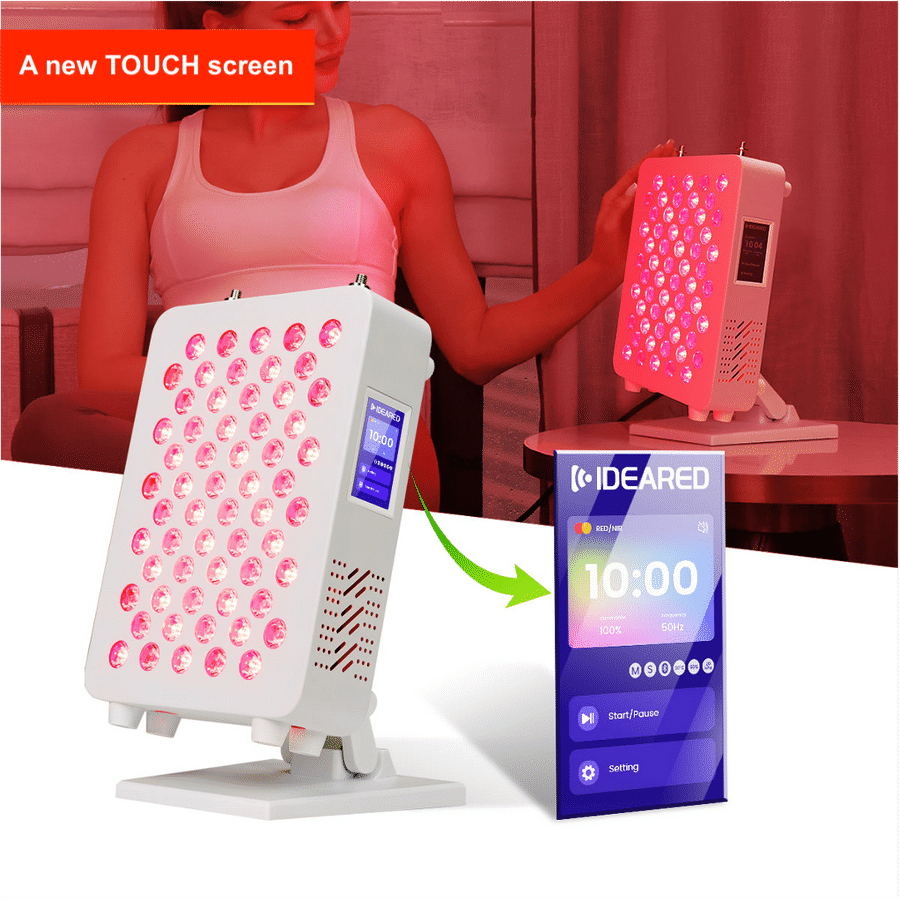
The ATHENA is a compact touchscreen panel listed at $780 with a 2-year warranty. The US-plug variant was marked unavailable on the manufacturer’s listing when rechecked October 27, 2026; verify stock before ordering. It has 60 LEDs, a 30-degree beam angle, a timer, a remote, goggles, and a table stand. ATaPa claims over 212 mW/cm² at distances beyond 6 inches but does not say how this was measured.
What we could not verify: The same product page lists two different wavelength sets, 660 and 850 nm in one block and “630, 660, 810, 830, 850” in another, and does not say how much light each produces. We found no power draw, spectral data, or manual. The company’s FAQ says eye protection is not necessary, yet goggles are included. The product page also makes sweeping health claims, such as helping autoimmune and thyroid conditions, that we found no evidence for. Treat the ATHENA’s specs as unverified.
Hooga HG300
Visit Hooga’s website (affiliate link; opens the brand homepage).
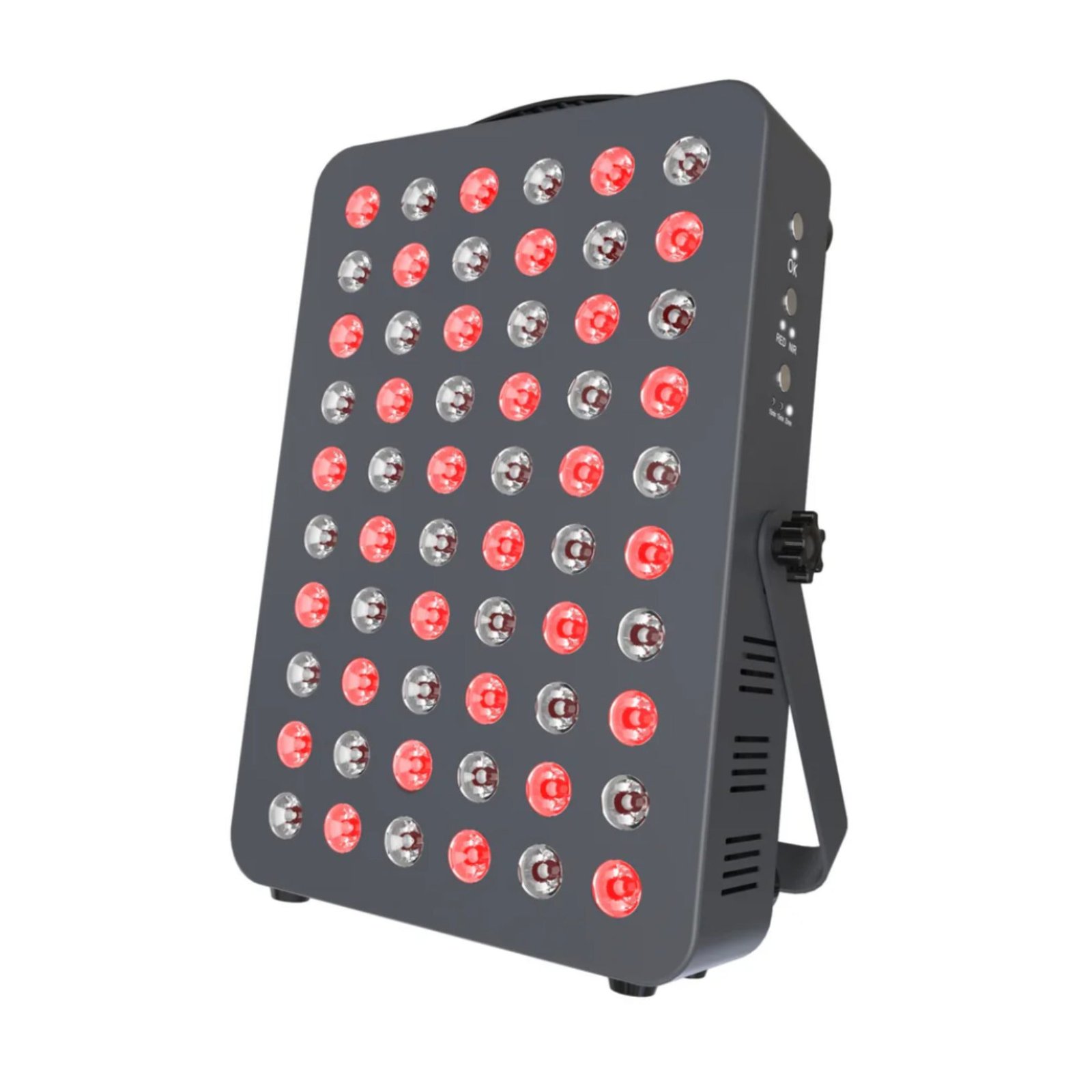
The HG300 was listed in our October 25 research at $199, with a 3-year warranty and 60-day returns (return shipping is deducted from refunds). It has 60 LEDs at 660 and 850 nm, separate red and near-infrared switches, a built-in timer, and a foldable stand. It uses about 80 W.
Things to know: Our prior research recorded 73 mW/cm² at 6 inches on the product page. We have not confirmed the revision and applicability of the manual behind a different reported figure, so we do not present that as a verified contradiction. The product-page figure is a manufacturer claim, not our measurement. Hooga says eye protection is not required, though goggles are included. The product page markets collagen, wrinkle, and acne benefits and notes that its statements have not been evaluated by the FDA. Among these red light therapy devices for face use, the HG300 has the lowest listed price by a wide margin.
Joovv Mini 3.0
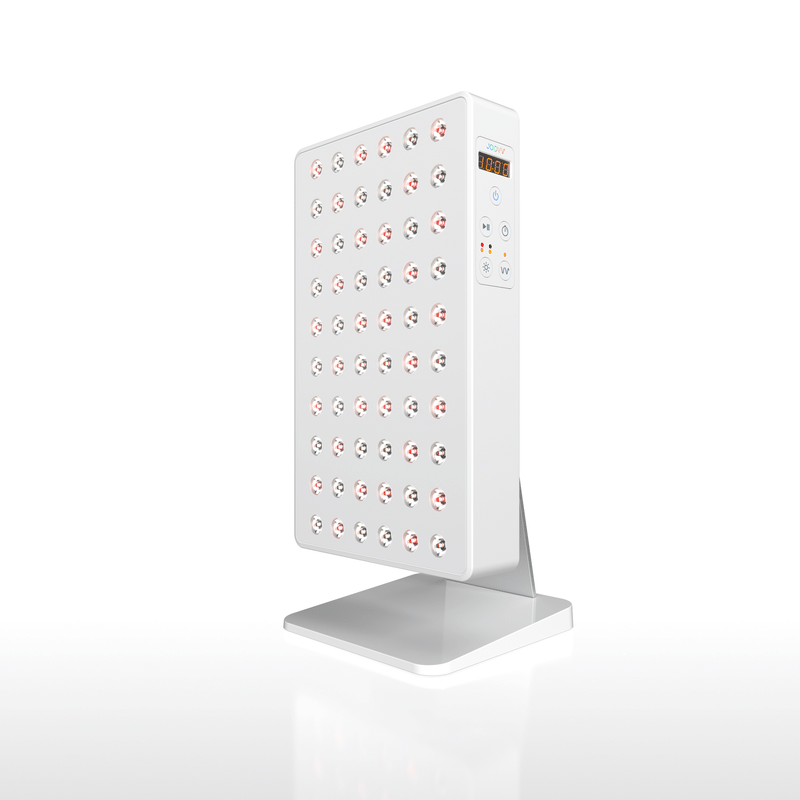
The Mini 3.0 is listed at $1,099 with a 2-year warranty. Joovv’s specs list 60 LEDs (30 red, 30 near-infrared) at 660 and 850 nm, Bluetooth 5.0, and a weight of about 7 lb. The Joovv app offers session tracking, Ambient mode, an alarm clock, and pulsed Recovery+ mode. Joovv says its Generation 3.0 devices are certified by Intertek to medical electrical equipment safety standards. It states an irradiance of over 100 mW/cm² but gives no distance or method, so you cannot compare that number with Hooga’s figures. For more on the brand, read our Joovv Solo 3.0 review.
Things to know: Joovv markets the Mini for temporary relief of minor muscle and joint pain and related effects, not for skin. Its only registered study, from 2020, used the earlier Joovv Mini, had no control group, and has no posted results. Joovv says to use eye protection whenever near-infrared mode is on.
Mychondria MyLight MIDI 2.0
Visit Mychondria’s website (affiliate link; opens the brand homepage).
The MyLight MIDI 2.0 is a compact panel with 630, 660, and 850 nm LEDs, a 30-degree beam, and a listed 420 W. It costs $1,099.95 with a door mount or $1,349.95 with a foot stand. For buyers comparing red light therapy devices for face use, its additional red wavelength and long manufacturing-fault warranty are documented features, not proof of better facial results. Clarification is still needed on regulatory wording and eye guidance.
Open questions we found:
- FDA wording: The site says “FDA REGISTERED” and “FDA cleared,” but we located no FDA listing or clearance for this product, and registration is not clearance.
- Light output: The 89.0 mW/cm² figure at 6 inches (61.0 at 12) comes from Mychondria’s own handheld-spectrometer test, which we have not independently validated. We ignore the higher solar-meter figures it labels “for reference only.”
- Evidence: We found no trial of the MIDI 2.0. The only study is a 10-person neuropathy pilot run and funded by the company, with no control group and no peer review. It is not a face study.
- Eye guidance: The protocol guide says to keep your eyes open during a “vision” session, while the FAQ says to close them or wear the included goggles. The public guide lists no warnings.
- Returns: The refund policy checked October 26, 2026 allows 60 calendar days from delivery to request a return. Accepted returns receive a Mychondria-paid label; original condition and packaging are required. Third-party charges are non-refundable. That policy states 10 years for manufacturing faults and 2 years for accessories. Confirm the terms applicable to your order before purchase.
- Missing specs: The product page does not report LED count or controls such as a timer or remote.
Eye Safety: The Brands Disagree
Eye protection guidance for red light therapy devices for face use differs by manufacturer. Joovv says to use eye protection when near-infrared mode is active and not to stare into the LEDs. Hooga’s manual and ATaPa’s FAQ say eye protection is not needed. Mychondria’s documents conflict with each other. For context, in 2019 Australia’s regulator announced a recall of a red-and-blue LED acne mask, citing possible retinal damage with repeated exposure in people with certain eye conditions or who take medicines that increase light sensitivity (TGA). That product was a mask, not a panel. If you have an eye condition or take medicine that makes you sensitive to light, ask a clinician before using any of these.
How to Choose Red Light Therapy Devices for Face
- If price matters most: the Hooga HG300 costs a fraction of the others, with a 3-year warranty and a 60-day return window.
- If app control and safety paperwork matter most: the Joovv Mini 3.0 offers app-based features; Joovv reports Intertek electrical safety certification. We did not test the app or independently inspect the certificate.
- If comparing wavelength options: Mychondria lists 630, 660, and 850 nm. ATaPa’s conflicting wavelength descriptions need clarification before they can support a buying recommendation. Extra wavelengths alone do not establish superior results.
- Before buying red light therapy devices for face use: read the manual’s distance and timing guidance, and do not treat any irradiance number as proof of results.
Red Light Therapy Devices for Face: Five Buying Checks
- Read the instructions first. Find the manual for the exact model and revision you intend to buy. Check its distance, timing and eye-protection guidance. If the product page and manual disagree, request clarification before ordering.
- Compare the complete setup. Check which stand or mount is included, where the panel will sit, and whether its controls suit that position. Compare the price of the configuration you will actually use.
- Keep light-output claims in context. Look for the measurement distance and method. A figure without that context does not establish that one panel performs better than another.
- Read the return policy separately. Confirm when the return window starts, who pays shipping, and what condition and packaging the company requires. Save the terms that apply to your order.
- Check what the warranty covers. Distinguish manufacturing faults from accessory coverage and return rights. Ask the seller about any missing terms rather than assuming a longer warranty covers every problem.
Frequently Asked Questions
Do red light therapy devices for face use work?
Some controlled trials of other devices report modest, short-term improvements in wrinkle measures, but results are mixed and long-term data are limited. No independent trial of these four red light therapy devices for face use was found.
Can red light therapy devices for face use treat acne?
The best evidence for light therapy and acne is for blue plus red light. None of these four red light therapy devices for face use emits blue light, and the evidence for red light alone is limited.
Are red light therapy devices for face use FDA approved?
We did not verify FDA clearance or approval for any of the four. Our prior search located a Joovv infrared-heating-lamp listing; we have not established that the separate HG300-named OEM listing belongs to Hooga’s product. Listing is not clearance. See the FDA section above.
How long and how often should I use one?
There is no single schedule for red light therapy devices for face use. Trial protocols varied widely and were tied to specific devices, so follow the manual that comes with yours and ask a clinician if you are unsure.
Who should ask a doctor before using red light therapy devices for face?
Anyone who is pregnant, takes medicine that can increase light sensitivity, has an eye condition, has a skin condition, or has darker skin and a history of pigmentation changes. This guide is general information, not medical advice.
Our Buying Takeaway
When comparing red light therapy devices for face use, start with the features you can verify: price, controls, warranty, return terms and clear operating instructions. The Hooga HG300 is the lowest-priced option in this comparison; the Joovv Mini 3.0 adds app controls. ATaPa and Mychondria have documentation questions worth resolving before ordering. None of these differences establishes better facial results, and we found no independent clinical trial of any of these four exact panels.
Product Sources and Buying Terms
Manufacturer sources: ATaPa ATHENA; Hooga HG300; Joovv Mini 3.0; Mychondria MIDI 2.0; Mychondria refund and warranty policy. ATaPa, Joovv, and Mychondria product pages were rechecked October 26, 2026. Hooga’s page could not be refreshed during this check; confirm its current price, specifications, and terms before ordering. Clinical links above concern other devices. This comparison of red light therapy devices for face use is based on documents, not hands-on testing.
About the author: Mike Tolentino, Red Iron Peak. This is a research-based buying guide, not a hands-on test. Manufacturer claims and independent evidence are identified in the article. Editorial transparency update: October 27, 2026; product source-check dates are stated separately.