
We may earn money or products from the companies mentioned in this post.
Red light therapy for pain may help in some condition-specific treatment plans, but it is not a proven all-purpose pain remedy. Tendon research includes encouraging results, often alongside exercise; back-pain findings are mixed, and improvement in fatigue or disability is not the same as pain relief. Before buying a home device, check whether its evidence matches your diagnosis, the equipment and the treatment protocol.
Research-based guide by Mike Tolentino, founder of Red Iron Peak. Sources checked November 10, 2026. We have not conducted clinical testing, and this article is not medical advice.
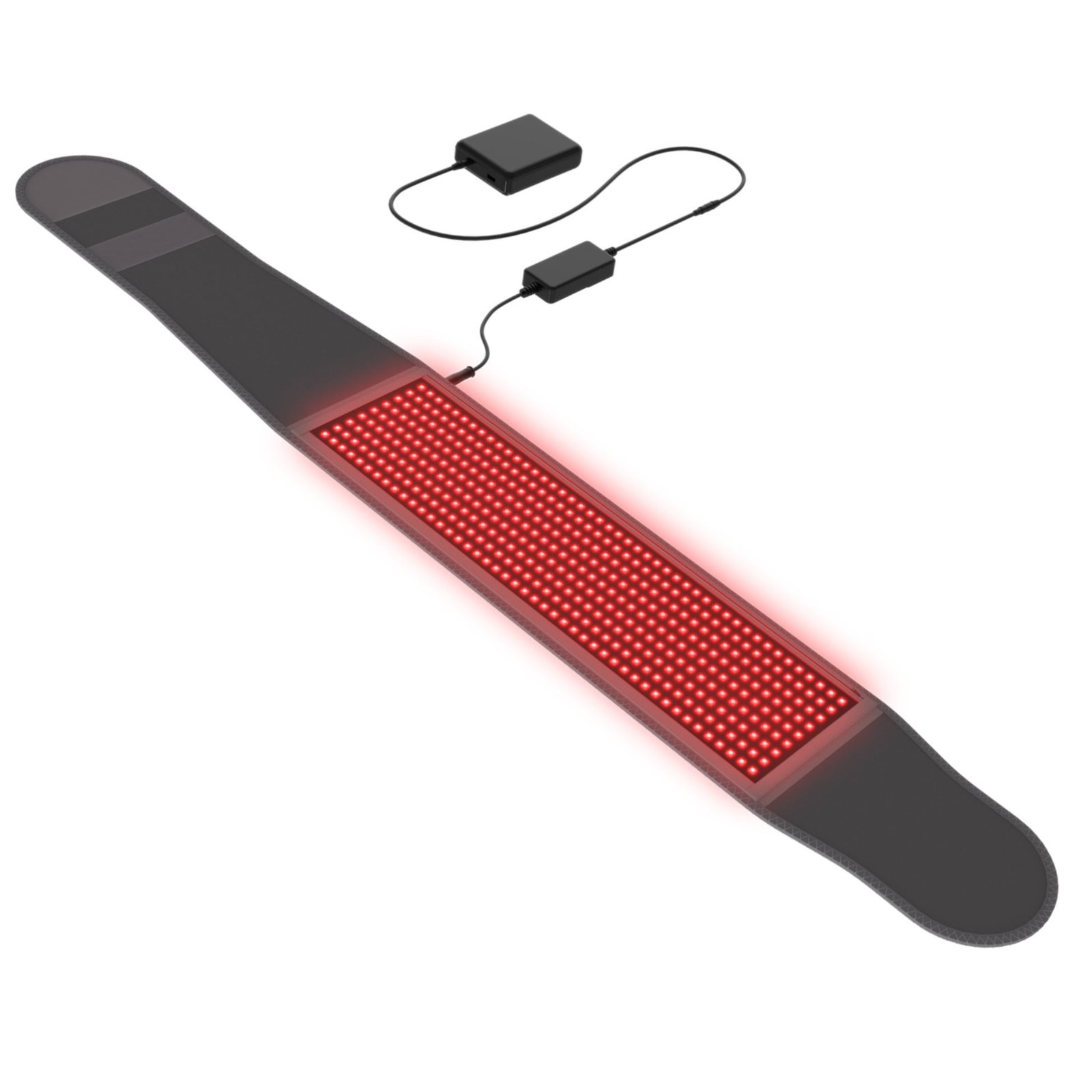
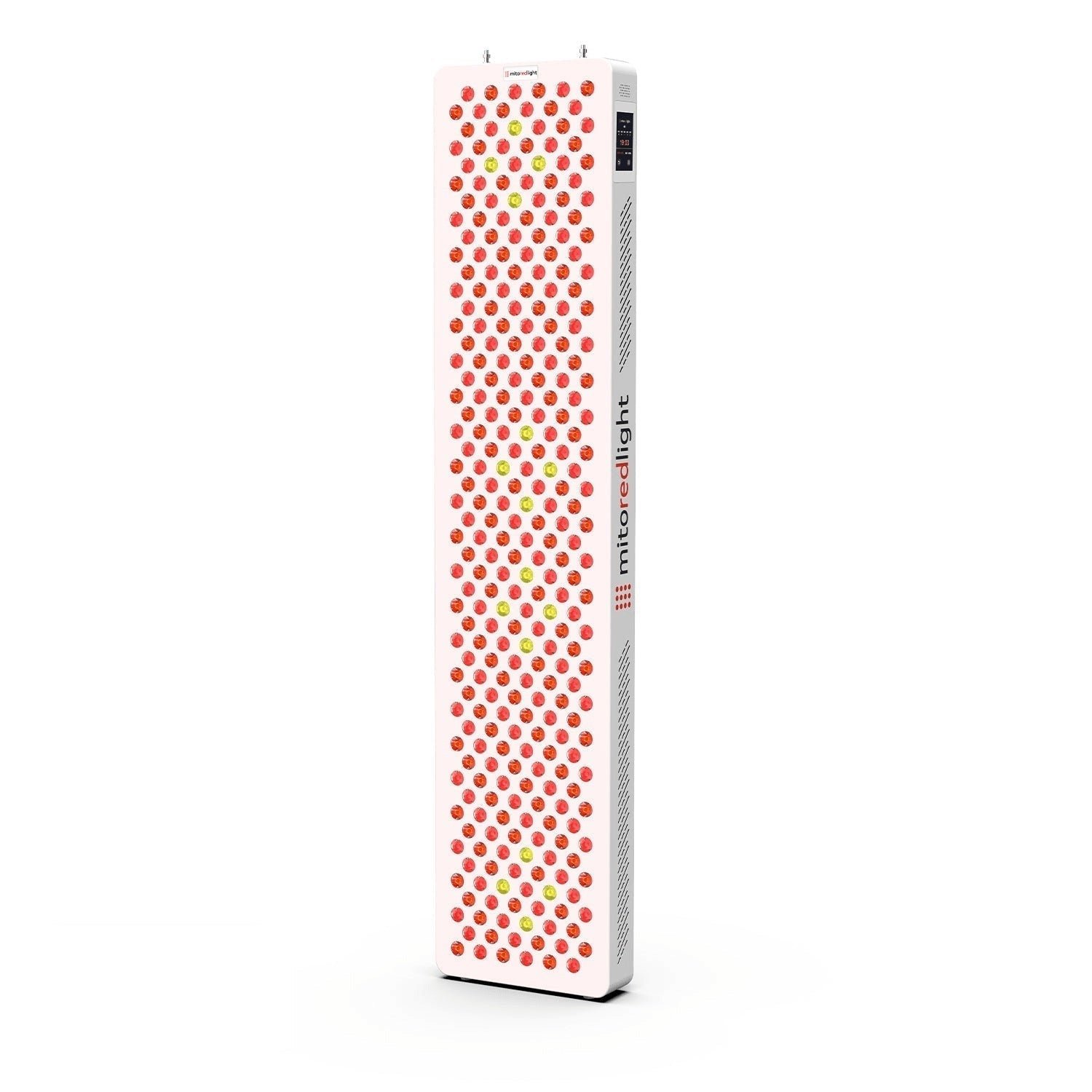
Disclosure: Red Iron Peak may earn commissions from qualifying purchases through affiliate links. Product photographs below illustrate equipment formats; they are not evidence of treatment effectiveness.
Table of Contents
Does red light therapy for pain actually work?
The honest answer depends on what hurts and what treatment is being proposed. Photobiomodulation, usually shortened to PBM, is the research term used for these low-level light treatments. Papers may study red light, near-infrared light, lasers or LEDs with very different delivery methods.
Our practical judgment: a relevant clinical protocol can be worth discussing as an addition to care. A panel sold for red light therapy for pain needs evidence specific to the device and intended use. A sales page can cite a legitimate study without showing that its panel delivers the same treatment. The connection between that study and that product needs to be shown.
What the research supports—and which outcome improved
These are selected human research findings, not a complete systematic review of every pain diagnosis. Read the outcome column carefully: a positive result for one symptom does not establish the same result for another.
| Condition or question | Finding in the cited research | Important boundary |
|---|---|---|
| Chronic tendinopathy | A 2025 review found short-term pain benefit from low-level laser therapy versus minimal intervention. | Not proof that a consumer LED belt or panel reproduces the protocol. |
| Tendinopathy with exercise | A 2021 review favored PBM plus exercise over sham plus exercise on pain and function. | The advantage did not consistently carry over to active-treatment comparisons. |
| Burning mouth syndrome | A 2025 umbrella review reported moderate-certainty pain improvement. | This oral condition does not establish treatment for a painful knee, back or shoulder. |
| Knee osteoarthritis | The umbrella review reported moderate certainty for improvement in disability. | That certainty rating must not be relabeled as the same evidence for pain relief. |
| Fibromyalgia | The umbrella review reported improved fatigue but graded certainty inconsistently across sections. | Fatigue improvement is not proof that all fibromyalgia symptoms improve. |
| Non-specific low-back pain | Some reviews and guidance describe possible benefit; a 2020 review found no clinically important benefit versus sham for pain and disability. | Results depend on the evidence set and protocol; neither a guaranteed cure nor a blanket home-device recommendation follows. |
Sources: Yap and Lim, 2025; Tripodi and colleagues, 2021; Son and colleagues, 2025; Tomazoni and colleagues, 2020; and NCCIH’s low-back-pain evidence summary.
Red light therapy for pain from tendinopathy
The 2021 tendinopathy review included 17 trials and 835 participants. Its authors rated evidence from very low to moderate quality. PBM with exercise performed better than sham with exercise, but adding it did not establish a pain advantage over other interventions combined with exercise.
A newer 2025 review, which searched through January 2025, also found pain benefit for low-level laser therapy compared with minimal intervention in chronic tendinopathy. Its headline finding concerns short-term pain and laser treatment. It does not identify a winning retail panel or show that light should replace rehabilitation.
This is where the comparator matters. A sham treatment is a simulated treatment used to help isolate an effect. Beating sham asks a different question from beating another active therapy. If you are already following a rehabilitation plan, the useful question is what light adds to that plan—not whether it outperformed doing very little.
Red light therapy for pain in the lower back
A 2020 systematic review included 12 randomized trials with 1,046 participants. Compared with sham, it found the differences in pain and disability clinically unimportant in non-specific low-back pain. In chronic cases, it also found no clinically important advantage over exercise on those outcomes.
That is not the whole literature. NCCIH summarizes other evidence suggesting possible benefit under certain laser-treatment conditions and notes that an American College of Physicians guideline included low-level laser as an initial option for chronic low-back pain, based on low-quality evidence.
The useful conclusion is uncertainty, not a guaranteed result. These sources do not make a home LED panel equivalent to the clinical laser treatment discussed in a guideline. Nor does a back-pain finding automatically apply to sciatica or every other cause of pain.
What the 2026 low-back-pain trials added
A March 2026 sham-controlled trial followed 30 adults who used a specific portable low-level laser or a matching sham at home. Pain scores improved in both groups, and the authors found no significant differences between groups in pain, disability, mobility or quality of life. The small sample and short follow-up limit what it can tell us about smaller or longer-term effects.
An August 2026 randomized trial compared red and near-infrared LED treatment plus rehabilitation with dim-red sham light plus the same rehabilitation in 176 adults with chronic nonspecific low-back pain. At 28 days, the authors reported a two-point difference in pain-score improvement, above the 1.5-point threshold they cited. The post-treatment difference in function was 1.3 points on the Japanese Orthopaedic Association scale, below the 2.5-point threshold they cited. The trial was registered retrospectively, which makes it harder to check which outcomes were planned before the results were known.
A separate randomized trial of light therapy alongside motor-control exercise reported negligible differences in pain and disability at six weeks compared with sham light plus the same exercise. Together, these trials leave uncertainty about the size and durability of any added benefit for chronic nonspecific back pain.
The distinction matters if your goal is to walk farther or sit through a commute. In the August trial, the difference in pain cleared the study authors’ benchmark while the difference in function fell short of its benchmark. The March trial also shows why a before-and-after improvement alone is hard to interpret: people using the sham improved too. When a seller cites a trial, check which result it is borrowing and whether it came from a comparison between groups.
Pain, disability and fatigue are separate results
The 2025 umbrella review examined existing meta-analyses and reported mostly low or very low certainty across outcomes, with moderate certainty for selected findings. Its database search ended in December 2023, so “published in 2025” does not mean it includes every trial published through 2025.
When a seller calls red light therapy for pain “clinically proven,” look for the actual endpoint. Pain intensity, ability to perform tasks and fatigue answer different questions. Do not turn an improvement in one measure into a promise that pain disappears. For a broader condition-by-condition overview, see our red light therapy benefits evidence guide.
A clinical study is not automatically evidence for your home device
Before buying a device marketed for red light therapy for pain, compare these details:
| Check | Question to ask the seller or clinician |
|---|---|
| Diagnosis and outcome | Did the study examine my condition and measure the result I want? |
| Device and delivery | Was it a laser, LED array, contact probe, belt or stand-off panel? |
| Treatment location | Was light delivered to the same tissue or body area? |
| Parameters | Are wavelength, delivered output, distance, dose, timing and session frequency comparable? |
| Other care | Did participants also receive exercise, medication or another treatment? |
This is an applicability check, not a home dosing recipe. If the seller only supplies a wavelength and a list of studies, several important links in the argument remain missing. A larger panel or longer wavelength list does not fill them in.
Three specs to find before comparing a device with a study
Wavelength describes the light emitted. Irradiance describes optical power arriving per unit of area at the stated measurement location. Radiant exposure describes optical energy arriving per unit of area over time. You need the test setup to interpret those numbers. The FDA’s draft guidance for photobiomodulation devices discusses these and other parameters for manufacturers submitting relevant devices.
Start with the exact model number. A spec sheet for a product line can mix different models and accessories. Ask whether its irradiance number refers to contact with the skin, a named distance from the device, a peak measurement, or an average over an area. If a brand gives two numbers measured at different distances, they cannot answer which device delivered more light to the same spot under the same conditions.
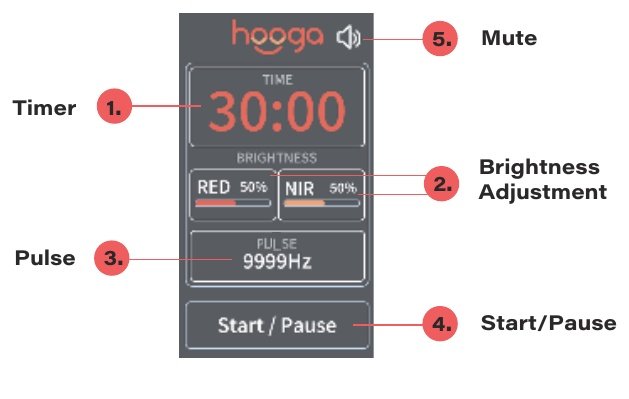
Look for the treatment location and the size of the area exposed. A small applicator aimed at a defined tendon and a broad panel aimed at an entire limb are different delivery setups. A wearable can make placement more repeatable, while a stand-off panel depends on where you position it. Neither convenience feature establishes that the device reproduces the studied exposure.
Why there is no universal number of minutes
A study’s schedule belongs to the equipment and protocol it tested. Copying its session length onto a different panel does not establish a comparable dose. Advertised electrical wattage is also not a measurement of light delivered to the target tissue.
Follow the exact device instructions and discuss suitability with a qualified clinician. Do not assume a stronger setting or longer exposure will improve the result. If a manufacturer cannot explain the relevant output and treatment parameters, that is a reason to question a precise treatment promise.
Safety: check suitability before starting
The American Academy of Dermatology’s home-device precautions include checking for light-sensitive conditions and medications, following instructions and using the specified eye protection. Sunglasses are not a substitute for protective goggles when goggles are required. It reports that mild temporary discomfort or skin irritation can occur and that long-term effects on skin remain uncertain. This skin-focused guidance is not a complete safety assessment for every pain diagnosis.
Do not delay assessment of persistent, unexplained or worsening pain to try a device. For back pain accompanied by new bladder or bowel problems, numbness around the genitals or anus, or weakness or numbness in both legs, seek emergency care. The NHS identifies these as emergency warning signs.
Five limits to check before buying: whether the study enrolled people with your diagnosis, whether the light beat an appropriate comparison, whether the benefit showed up in the outcome you care about, how long the researchers followed participants, and whether the device for sale was the one they tested. A study can answer the first four questions and still leave the product claim unanswered.
Before buying red light therapy for pain
Make the evidence decision before the equipment decision. Ask your clinician whether the proposed approach fits your diagnosis and existing care, and what improvement would count as useful. If you proceed, consider recording both a symptom measure and a practical activity before starting, then reassess at a time agreed with your clinician. That record can help a conversation; it does not turn personal improvement into proof of cause.
Then check the ownership details: can you position the device comfortably, what accessories are required, and what will a return actually cost? A trial period is less useful if return freight or a restocking charge makes changing your mind expensive.
Our at-home setup guide addresses placement and ownership. The device buying guide and MitoPRO 1500X review compare equipment features. Those reviews are not rankings of proven pain treatments.
How to check a claim before spending money
Suppose a belt page says “clinically studied” and links to a tendon trial. Write down the exact model sold, the device named in the paper, the diagnosis, and the comparison group. If the paper tested a clinic laser and the listing sells an LED belt, record that mismatch. If the trial combined light with exercise, check whether the seller describes the combined care when quoting the results.
For an FDA clearance claim, ask for the clearance number and open the decision summary. Match the applicant, model and intended use to the listing. A claim for temporary relief of minor aches is narrower than a claim that a device treats chronic nonspecific back pain. Save the wording and return policy if they influence the purchase. Check when the return window begins and whether an opened device qualifies.
Give the seller a specific question it can answer: “Can you send the controlled human study for this exact model, and point me to the outcome for my condition?” If the reply is a general research roundup, use it to learn about the treatment category. When you need evidence about the product, keep looking for a study that actually names the model and describes how it was used.
Frequently asked questions
Is red light therapy for pain proven?
There are supportive findings for specific conditions and protocols, but no universal pain-relief conclusion follows. The diagnosis, comparator, outcome and evidence quality all matter.
Can it replace exercise or physical therapy?
The tendon evidence discussed here does not justify replacing rehabilitation. Some favorable results specifically involved light treatment alongside exercise. Discuss any change to prescribed care with your clinician.
Is a red light belt better than a panel for pain?
The selected research does not establish a general winner between consumer formats. A belt’s convenience or a panel’s size is an ownership difference, not proof of better pain relief.
Does FDA registration mean a device is cleared for my pain condition?
No. The FDA distinguishes registration and listing from approval, clearance and authorization. Check the exact device and intended use rather than relying on a registration claim.
Our conclusion
Red light therapy for pain is a condition-specific question. Tendon findings give a reason to discuss certain protocols as an adjunct; mixed back-pain results and outcome-specific evidence give a reason to resist broad promises. Buy equipment only after you understand what has actually been studied and what remains uncertain for your situation.

About this guide: Mike Tolentino is the founder of Red Iron Peak, not a medical professional. This guide uses selected human research reviews, public medical guidance and manufacturer photographs; we did not test treatment outcomes. Read about our research approach. Source checks: November 10, 2026.