
We may earn money or products from the companies mentioned in this post.
Editorial update: November 1, 2026. The opening answer and author attribution were clarified. Product and study source-check dates remain as stated below.
Red light therapy benefits have human evidence for certain skin, hair-loss and pain outcomes, but the device and condition matter. Evidence for exercise recovery is mixed, and sleep research remains preliminary. A positive clinical study does not establish that every home panel delivers the same result.
When comparing red light therapy benefits, the useful question is specific: what improved, in whom, using which equipment? This guide separates those findings from the broader promises used to sell devices. If you are already comparing equipment, our home red light device comparison covers the buying tradeoffs.
On this page
Table of Contents
Red light therapy benefits: the evidence at a glance
These descriptions summarize the research discussed below. They are editorial summaries, not formal evidence grades or product ratings.
| Claim | What the evidence suggests | Important limit | Home-device relevance |
|---|---|---|---|
| Facial skin appearance | Some LED studies report improvements in wrinkles and texture. | Protocols differ; comparative and long-term evidence is limited. | Some research directly studies home facial devices, rather than large panels. 2026 review |
| Pattern hair loss | Laser and LED scalp treatments can improve hair density compared with placebo. | Findings vary substantially; other hair-loss diagnoses are less established. | Scalp-device evidence does not validate an arbitrary body panel. Hair review |
| Knee osteoarthritis symptoms | Clinical laser trials report pain and disability improvements. | Dose, protocol and the outcome measured matter. | Not a generic home-panel treatment prescription. Knee review |
| Exercise recovery | Some localized, pre-exercise research suggests less subsequent soreness. | Evidence is low certainty; whole-body findings are less encouraging. | Post-workout panel claims need their own evidence. Soreness review |
| Sleep quality | A small 2026 synthesis found a possible improvement in sleep-quality scores. | Few trials, varied protocols and limited precision. | No established routine for every home panel. Sleep review |
| Guaranteed fat loss, testosterone boosts or whole-body healing | The evidence reviewed here does not establish these broad promises. | Each claim needs separate, relevant human trials. | Do not treat a benefit list as clinical validation. |
What red and near-infrared light therapy mean
Photobiomodulation, often shortened to PBM, is the research term used for treatments involving low-level light, commonly red or near-infrared light from lasers or LEDs. Red light is visible; near-infrared light is outside the visible range. Research spans different equipment, treatment areas and clinical goals. A 2025 umbrella review found outcome-specific evidence with overall low-to-moderate certainty.
A mechanism involving cellular responses can help explain why scientists investigate light. It cannot tell a buyer that a particular device treats a particular problem. Clinical outcomes still need clinical testing. Likewise, a wavelength label alone is not a complete treatment specification.
Think of “red light therapy” as a category of interventions. A scalp cap, a facial LED device and a clinician’s targeted laser may all appear under that label, while delivering quite different treatments. The category name is too broad to settle a purchase.
Red light therapy benefits for skin appearance and wrinkles
There is relevant human research on facial LED treatment. An older sham-controlled study compared 633 nm red light, 830 nm near-infrared light, their combination and a sham treatment. It reported improvements in facial skin measures after a defined treatment course. Substantial dropout between enrollment and the final analysis limits confidence. Lee et al., 2007.
A separate 2014 controlled study reported improved skin roughness and ultrasound measurements of collagen density. Its equipment used large-area gas-discharge lamps, not LED masks. The untreated control group was not randomized and included company employees; equipment-provider funding and investigator remuneration were disclosed. Those details matter when weighing the result. Wunsch and Matuschka, 2014.
More directly relevant to home use, an October 2026 systematic review included eight studies with 365 participants using at-home LED facial devices. It reported improvements across several facial-aging measures, but highlighted varied protocols, limited comparative data and underrepresentation of diverse skin types. This supports cautious interest in the devices studied, rather than equivalence across every mask or panel. Das et al., 2026.
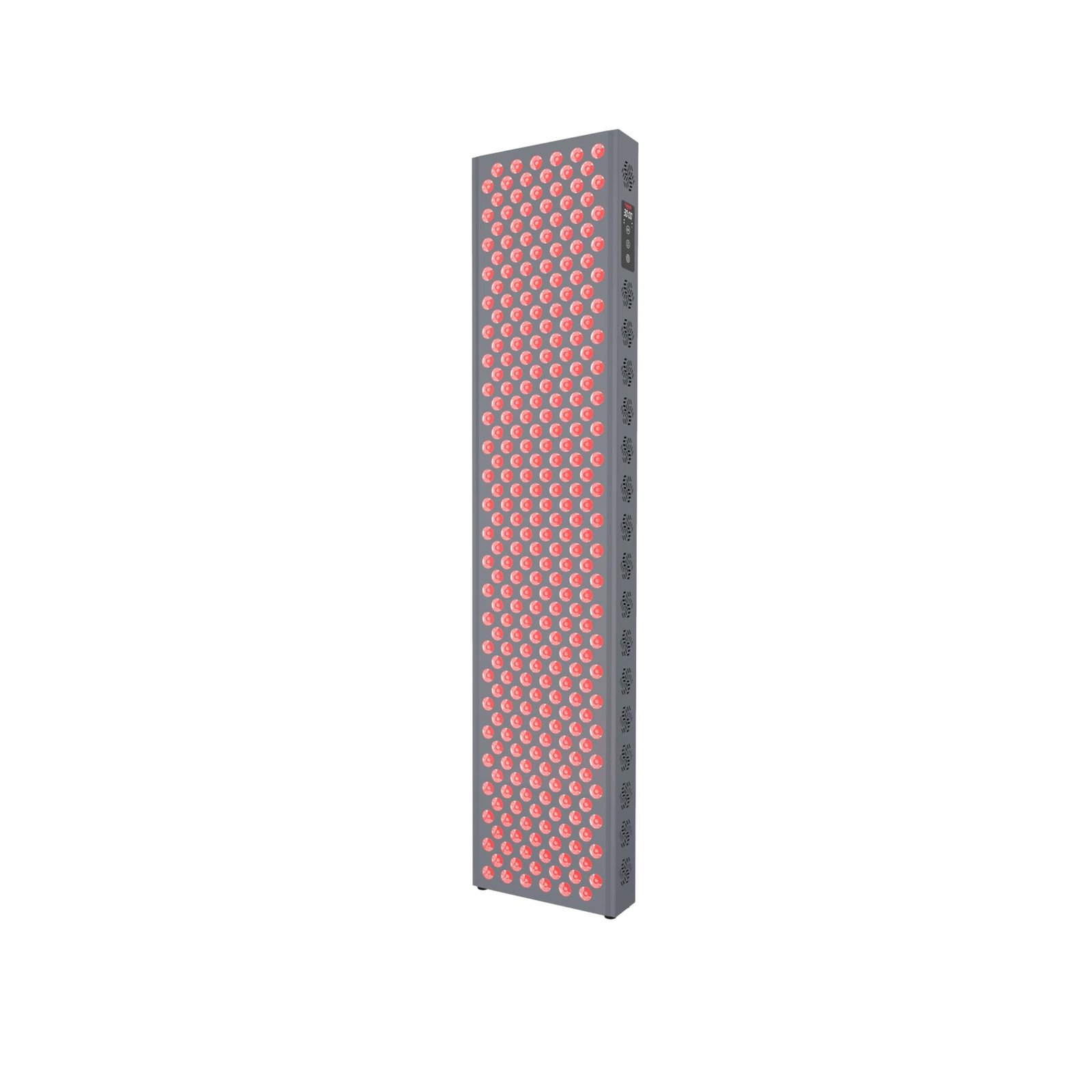
For a buyer, the distinction is practical. Ask whether the study used the model you are considering or a meaningfully comparable device. A study of facial treatment should not be presented as proof that a large body panel produces the same cosmetic result. Our face-panel comparison explains the formats and specifications without claiming that matching wavelengths proves matching outcomes.
Red light therapy benefits for pattern hair loss
A 2025 systematic review found improved hair density with low-level laser or LED therapy compared with placebo in androgenetic alopecia, the medical term for pattern hair loss. Results varied substantially between studies, and there was insufficient statistical information to pool other hair-loss types. Its 38 included studies were not all necessarily randomized trials. Perez et al.
A newer 2026 review also reported favorable hair-density findings for the low-level laser subgroup. That paper evaluated several energy-based approaches, including fractional lasers; their results should not be merged into a claim about ordinary red-light LEDs. Alahmadi et al., 2026.
The buying implication is to start with the diagnosis and treatment format. A purpose-built scalp device and a standing panel are different purchases. Hair density is also a specific measured outcome, not a promise of restoring a full head of hair. If a brand cites a review, ask which included device resembles its product and whether the intended use matches your situation.
Sudden or unexplained shedding deserves assessment rather than an assumption that every type of hair loss responds to light. A product comparison cannot determine the cause for you.
Red light therapy benefits for pain and joint symptoms
A systematic review in BMJ Open pooled 22 placebo-controlled trials involving 1,063 participants and reported pain and disability improvements with low-level laser therapy, with findings differing by treatment dose. Stausholm et al., 2019.
This does not establish one home routine for all joint pain. The clinical protocols used specified wavelengths, energy delivery and treatment locations. Copying the session duration while changing the equipment does not reproduce that protocol.
Tendon problems are another distinct application. A 2021 review found that PBM plus exercise performed better on some pain and function outcomes than sham plus exercise. Comparisons against other active interventions were less favorable, and the authors rated evidence quality from very low to moderate. Tripodi et al., 2021.
The 2025 umbrella review also separated knee disability from knee pain rather than treating all symptoms as a single benefit. That is a useful reminder: improved function, reduced pain and structural healing are different claims. Son et al., 2025.
For someone considering light as part of rehabilitation, the relevant discussion is about a diagnosed condition, a specific treatment and a measurable goal. An all-purpose “pain relief” label leaves too many questions unanswered.
Red light therapy benefits for exercise recovery
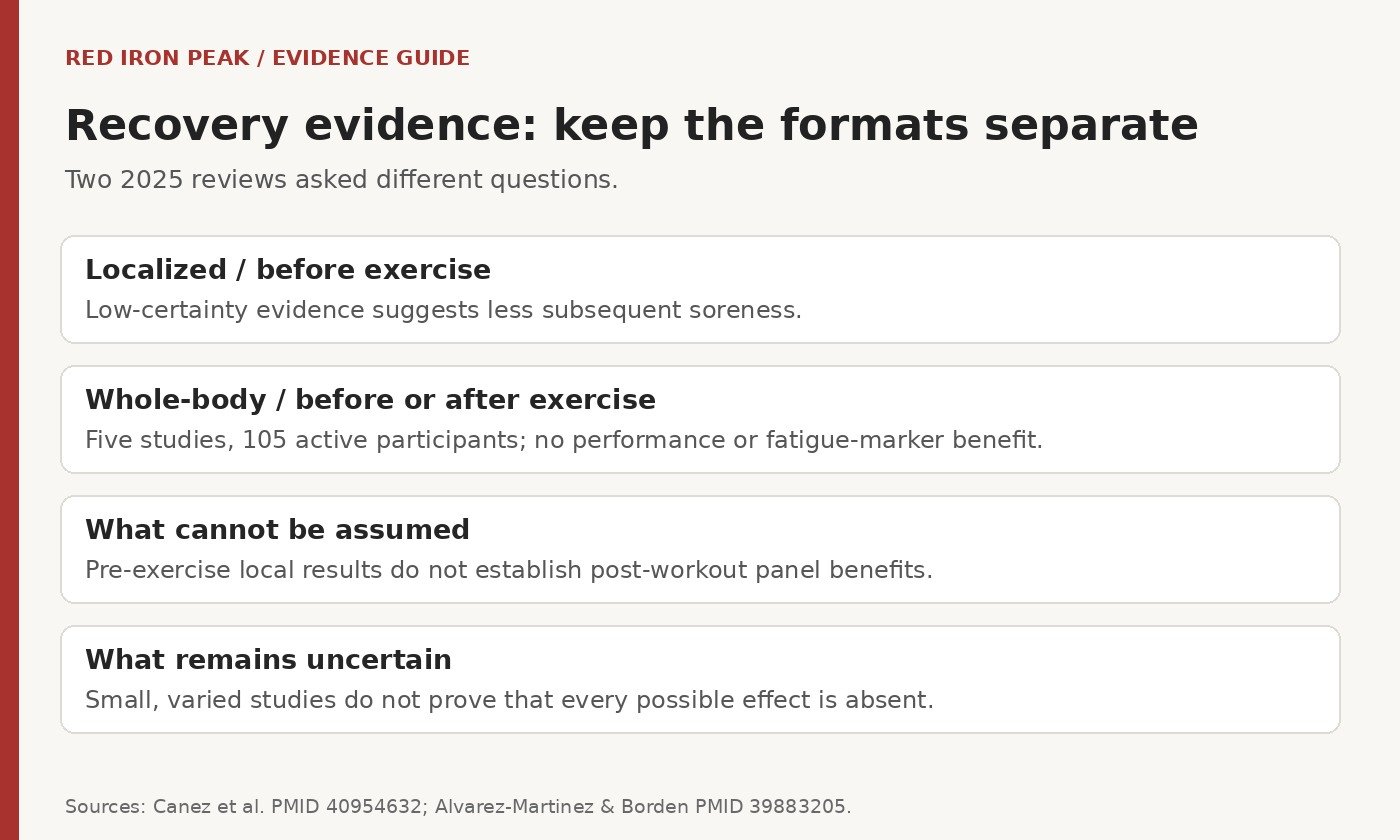
A 2025 systematic review found low-certainty evidence that PBM applied before exercise reduced subsequent muscle soreness. Its overall study and participant totals covered three recovery interventions, so those totals should not be presented as PBM-only evidence. Canez et al., 2025.
Whole-body findings deserve separate attention because they are closer to many consumer marketing claims. A 2025 systematic review identified five studies involving 105 physically active participants. None reported a benefit for fatigue biomarkers or exercise performance. The evidence base was small and varied, which limits how firmly either positive or negative conclusions can be drawn. Álvarez-Martínez and Borden, 2025.
Less soreness, a changed blood marker and better athletic performance are not interchangeable results. Nor does a result from treatment before exercise establish that a panel session after a workout has the same effect. If recovery is your main reason to buy, ask for evidence matching both the device format and the timing being advertised.
An assessment of red light therapy benefits should preserve the negative findings alongside the positive ones. Leaving them out would make the purchase look more settled than the evidence allows.
Red light therapy benefits for sleep: early evidence
Sleep research now extends beyond the small athlete study often cited in marketing. A 2026 systematic review pooled five randomized trials involving 240 participants and found a possible improvement in Pittsburgh Sleep Quality Index scores compared with sham. The authors emphasized limited evidence, varied methods and the need for larger standardized trials. Vital de Azevedo et al., 2026.
This is a reason to keep investigating, not a universal insomnia-treatment claim. The review does not provide a validated schedule for every consumer panel or establish long-term benefit. A subjective sleep-quality score also does not answer every question about sleep duration, sleep disorders or daytime functioning.
When assessing a sleep-related sales claim, ask whether it describes the studied intervention or merely borrows the phrase “red light.” A comfortable evening ritual and a tested medical treatment are different things to evaluate.
Claimed red light therapy benefits for weight loss and hormones
This article does not establish guaranteed fat loss, increased testosterone, organ treatment or generalized whole-body healing from home panels. That is a boundary of the evidence reviewed here, not a claim that every possible use has been disproven.
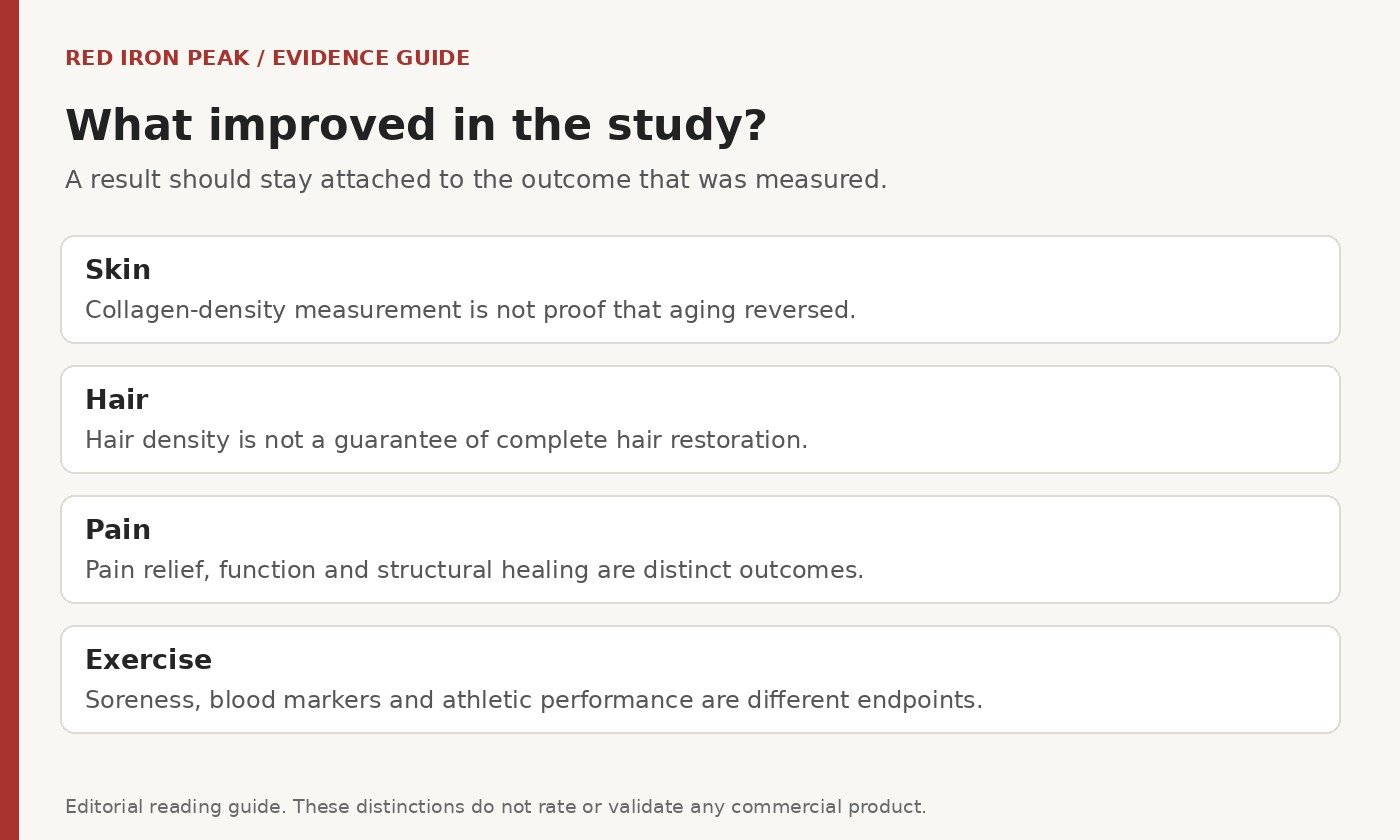
A paper about one symptom cannot validate an unrelated promise. Hair-density findings do not establish hormone optimization. A collagen measurement does not show that biological aging has reversed. A change in a laboratory marker does not, by itself, demonstrate better health or longer life.
Before accepting additional red light therapy benefits, ask for a controlled human study that matches the outcome and equipment being sold. Check whether the advertised result was compared with sham or only with participants’ own baseline. Look for the follow-up period, missing participants and disclosed commercial relationships. These questions are more useful than the number of scientific references on a sales page.
Do not let a broad benefit list substitute for a clear intended use. A device should earn consideration for the goal you actually have.
Do clinical red light therapy benefits apply to home panels?
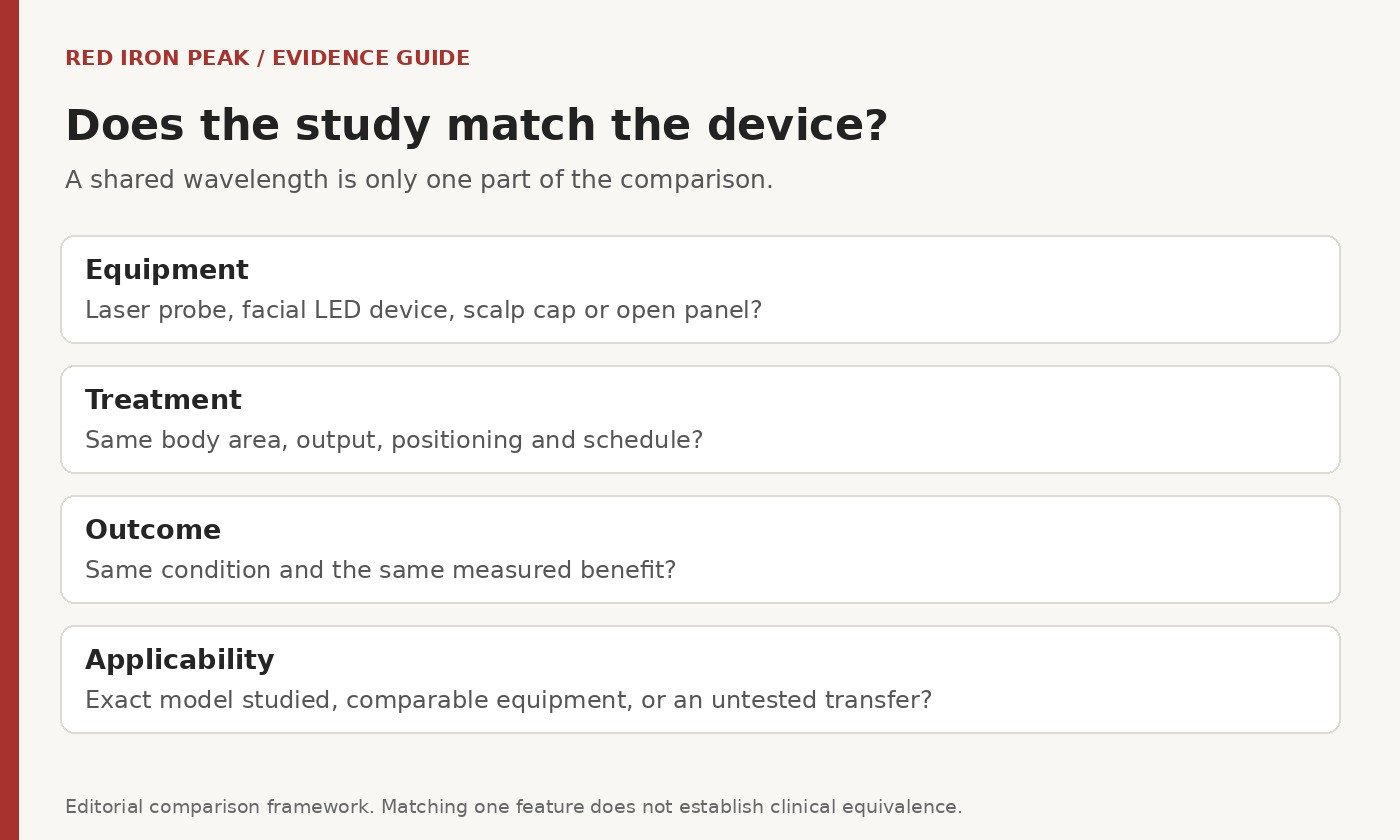
The biggest purchase risk is an evidence mismatch: a real study is cited, but it tested a materially different intervention. Use this checklist to identify the gap before comparing prices.
- Device format: Was the research on a lamp, laser probe, scalp cap, mask, wrap or open panel?
- Target area: Was light applied directly to a small treatment site, through hair, or across a large body area?
- Output documentation: Does the seller provide irradiance with a measurement distance and method? Electrical wattage alone does not describe exposure at your skin.
- Protocol: Can you identify the schedule, mode and treatment setting rather than only the wavelength?
- Outcome: Did investigators measure the benefit you want, or a proxy that marketing has stretched into it?
- Commercial relevance: Was this exact model studied? If not, what justifies applying the findings to it?
These questions do not require pretending to calibrate equipment at home. They help you recognize when the seller has not supplied enough information. Missing details should stay missing; a confident dose recommendation cannot fill them in.
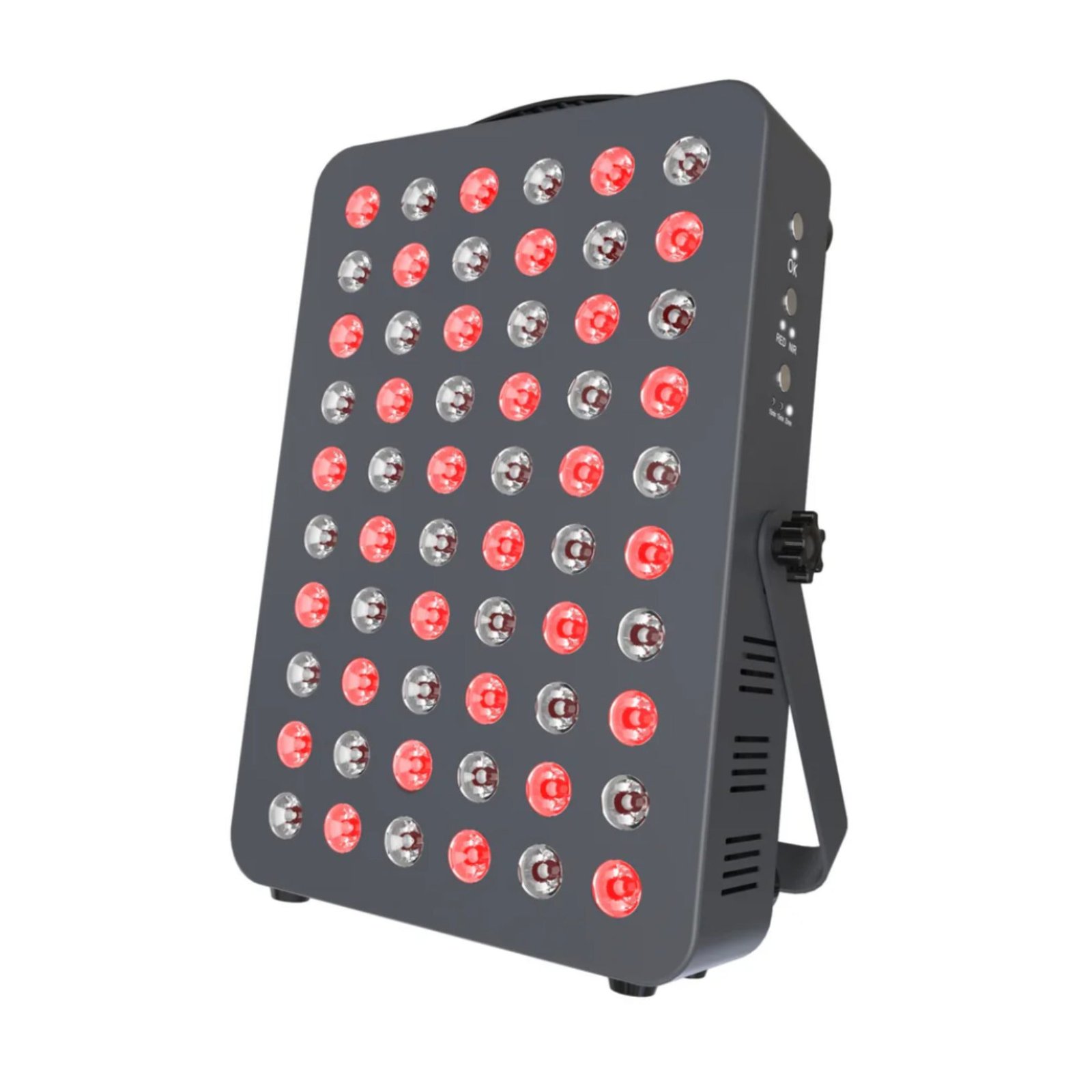
Our Joovv review and Mito versus Hooga comparison distinguish documented features from clinical proof. Extra controls, broader coverage and a longer warranty can matter to a buyer without being evidence of superior health outcomes.
What FDA wording actually tells you
FDA registration and device listing do not mean approval, clearance or authorization. The FDA also does not issue device-registration certificates. Check the exact model and intended use in the relevant official record rather than accepting a brand-wide badge. FDA consumer guidance.
Clearance and approval are different regulatory pathways; a 510(k) clearance generally concerns substantial equivalence to a legally marketed predicate device. It is not permission to attach every possible benefit to that product. FDA explanation of approval and clearance.
Ask the seller for the record supporting the claim on the page you are reading. If the record concerns a different model or indication, that distinction belongs in your purchase decision.
Red light therapy benefits and safety limits
The American Academy of Dermatology recommends checking suitability, following the exact device instructions and using the recommended eye protection when directed. Sunglasses should not replace protective goggles. Light-sensitive conditions and medications may change whether treatment is appropriate. Short-term skin irritation or mild pain can occur, and long-term effects remain less certain. AAD precautions for home use.
Do not assume closing your eyes replaces required protection. Do not increase exposure because an earlier session produced no visible result. The manual should specify the intended use, positioning and precautions; if it is unavailable before purchase, ask for it.
Incomplete safety reporting is another limitation. A 2026 umbrella review found that many included reviews did not provide adverse-event information. Absence of reported harm therefore cannot be treated as proof of safety for everyone. 2026 umbrella review.
For pregnancy, an eye condition, a suspicious skin lesion or a medical condition affecting the proposed treatment area, obtain individual advice before starting. This guide cannot establish suitability for circumstances that the cited studies did not evaluate. Unexplained pain, sudden hair loss and persistent sleep problems should not be self-diagnosed from a device’s benefit list.
What to check before spending money
Start with one goal. Write down the outcome you want, then look for a device intended for that use and evidence relevant to it. Buying for five unrelated promises makes it harder to judge whether any one of them is supported.
- Read the manual first. Confirm that the routine and required positioning fit your day and space.
- Request clear specifications. Wavelengths and output measurements need context, including test distance and mode.
- Check the complete cost. Include stands, protective equipment and any accessories needed for the intended setup.
- Read the return terms. Check the start of the return period, shipping responsibility, fees and exclusions in writing.
- Separate convenience from efficacy. A timer or app may make use easier without proving a better clinical result.
- Keep expectations measurable. Choose an appropriate way to assess your goal rather than relying on vague “wellness” impressions.
Use our device buying guide after you have narrowed the intended use. A comparison can help assess features and tradeoffs; it should not decide whether a medical treatment is appropriate for you.
How to weigh red light therapy benefits before buying
The most defensible red light therapy benefits are specific to conditions, outcomes and treatment formats. Skin and pattern-hair-loss research provides reasons for cautious interest. Pain research depends on diagnosis and protocol. Recovery findings are mixed, and sleep evidence remains preliminary.
Choose based on a defined goal, relevant evidence, usable instructions and acceptable purchase terms. Treat a study citation as the beginning of a check, not the end of it.
Frequently asked questions
Which red light therapy benefits have the best evidence?
There is meaningful human evidence for selected skin, pattern-hair-loss and pain outcomes, but no single ranking fits every condition. Evidence strength and relevance to home equipment differ. A positive result for one device format cannot establish all the benefits advertised for another.
How long do red light therapy benefits take to appear?
There is no universal timeline. Published studies use defined courses and follow-up periods, and those schedules do not establish an expected result for every buyer. Follow the specific device instructions and discuss realistic assessment points with the appropriate clinician when using it for a medical concern.
Can a full-body panel replace a hair cap or facial device?
Shared wavelength labels do not establish interchangeable treatments. Coverage, positioning, output and protocol differ. Look for evidence relevant to the model and intended use instead of assuming a larger treatment area means equal or better results.
Do stronger devices provide greater red light therapy benefits?
The reviewed research does not establish that increasing your device’s exposure improves results. Session time alone is an incomplete description of treatment. Stay within the exact instructions rather than copying a clinical dose or extending sessions to chase a faster response.
Does FDA registration prove red light therapy benefits?
No. Registration and listing do not establish clearance, approval or effectiveness. Verify any regulatory claim for the exact device and indication using the official record.
Is red light therapy a proven weight-loss or testosterone treatment?
The evidence assessed for this guide does not establish those broad home-panel claims. They require their own relevant controlled human evidence; findings about skin, hair or soreness cannot be borrowed to support them.
Sources and research notes
Research checked November 1, 2026. This is a focused evidence review, not an exhaustive literature search or a clinician’s individual assessment. Sources include human trials, systematic reviews, regulatory guidance and dermatology safety guidance. No hands-on device testing or independent output measurement is claimed.
- Son et al. Effects of photobiomodulation on multiple health outcomes. Systematic Reviews, 2025.
- Umbrella review of low-level light therapy: evidence across clinical conditions, 2026.
- Lee et al. Sham-controlled LED phototherapy study for skin rejuvenation, 2007.
- Wunsch and Matuschka. Controlled lamp study of skin appearance and collagen density, 2014.
- Das et al. At-home LED facial rejuvenation systematic review, 2026.
- Perez et al. Low-level laser and LED therapy in alopecia. Dermatologic Surgery, 2025.
- Alahmadi et al. Lasers and energy-based devices for androgenetic alopecia, 2026.
- Stausholm et al. Low-level laser therapy in knee osteoarthritis. BMJ Open, 2019.
- Tripodi et al. Red/NIR PBM in tendinopathy, 2021.
- Canez et al. Recovery interventions systematic review, 2025.
- Álvarez-Martínez and Borden. Whole-body PBM for exercise performance and recovery, 2025.
- Vital de Azevedo et al. PBM and sleep quality systematic review, 2026.
- American Academy of Dermatology. Home red-light therapy and precautions.
- FDA. Registration, certification and verification of medical-device status.
- FDA. Is it really FDA approved?