
We may earn money or products from the companies mentioned in this post.
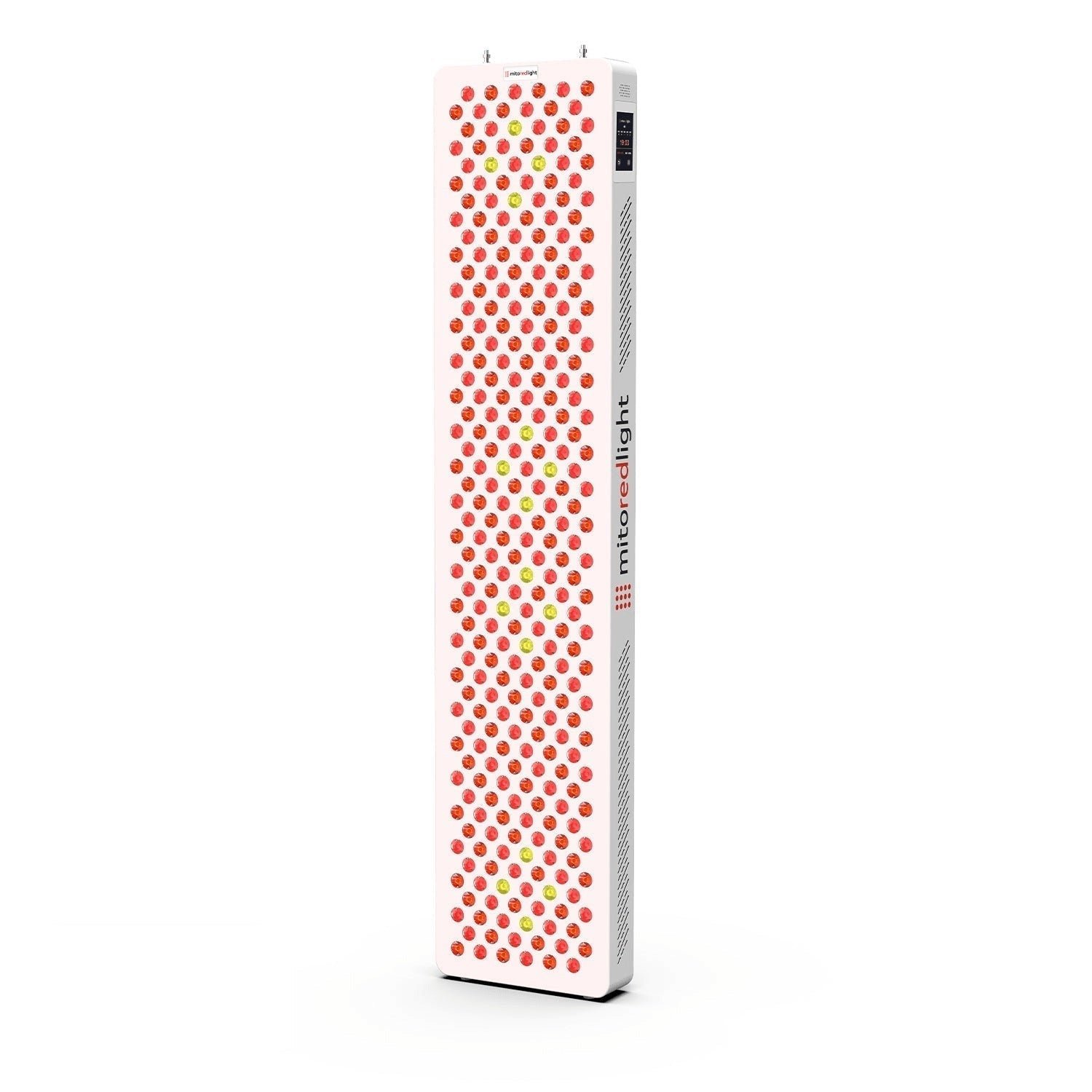
Red and infrared light are different parts of the spectrum. Home PBM panels often combine visible red light with near-infrared light, but that combination does not establish a better clinical result. Wavelength helps describe a device; it cannot replace evidence for your goal.
Table of Contents
Red and infrared light at a glance
| Question | Visible red | Near-infrared |
|---|---|---|
| Can you see it? | Yes, red light is visible | NIR is outside the visible range |
| Common panel examples | 630 or 660 nm | 810, 830 or 850 nm |
| Is it the whole infrared spectrum? | No; it is visible light | No; NIR is one infrared region |
| Does the label establish benefit? | No | No |
| What else needs checking? | Output, delivery and relevant evidence | Output, delivery and relevant evidence |
A 2026 review of red/NIR optics and dosimetry describes wavelength-dependent tissue transmission and emphasizes that wavelength alone does not define a treatment. Its discussion supports distinguishing the regions, not assigning a guaranteed depth or benefit to every consumer panel.
Does near-infrared always go deeper?
NIR around 810–850 nm generally transmits through tissue better than visible red in relevant optical comparisons, but there is no single depth that applies to every body part and device. Absorption, scattering, tissue composition and delivery geometry all matter. Progressively longer wavelengths also do not guarantee progressively deeper useful delivery.
A human tissue study using 660 nm light found that transmission depended on factors including tissue thickness, irradiance and tissue composition. That experiment is useful evidence against a universal penetration number. Detecting light through tissue also does not by itself establish an effective treatment dose at the target.
3 specs to check on red and infrared light panels
| Specification | What it describes | What to ask |
|---|---|---|
| Wavelength, nm | Spectral location | Which wavelengths actually emit in the selected mode? |
| Irradiance, mW/cm² | Power arriving per unit area | At what distance and with what measurement method? |
| Electrical consumption, W | Power drawn by the equipment | Is this being confused with light delivered to tissue? |
Treat these as different columns in your comparison sheet. Two red and infrared light panels can list the same wavelengths yet deliver different output at the distance you plan to use. Likewise, an electrical number should not be used as a clinical effectiveness score.
A dose calculation is not a treatment recommendation
For a hypothetical constant irradiance of 10 mW/cm² over 100 seconds, surface radiant exposure is 1 J/cm²: 0.010 W/cm² multiplied by 100 seconds. This is a unit-conversion example, not a suggested home dose. It assumes the stated irradiance is accurate and constant at the measured surface.
The calculation cannot tell you how much energy reaches a deeper target or whether that exposure helps a condition. For a real product, the measurement location, output mode and treatment geometry still need to be established.
Do more wavelengths make a better panel?
A larger wavelength count gives you a more complicated specification, not an automatic ranking. Our buying test is whether the seller can connect a feature to your actual use and to relevant evidence. If two panels meet the same practical need, a broader spectrum alone is not enough to justify the price difference.
Ask whether the output is adjustable, whether the controls are clear and whether the documentation explains each mode. Those are ownership questions you can assess separately from treatment claims. A well-described feature can be useful without being clinically superior.
Separate panel research from condition-specific evidence
For example, an older sham-controlled LED study examined facial skin outcomes using particular red/NIR treatment settings. Its results do not establish that every panel sharing a wavelength will deliver the same effect. That trial also lost participants before its final analysis, an important limitation when interpreting the findings.
Our wrinkles evidence guide examines the skin question. For practical formats and placement, use the home setup guide and device comparison. Choose the evidence question before the product feature list.
Safety does not depend on visible brightness
An invisible channel should not be judged by how bright it looks. Follow the device’s directions, including specified eye protection; dermatologists caution against substituting ordinary sunglasses when protective goggles are required. Check suitability if you have a light-sensitive condition or take photosensitizing medication.
Match the wavelength list to the mode you can use
Start with the manual for the exact model and revision. Copy its mode names into your notes and write down the wavelengths enabled in each one. A headline may list every wavelength the panel contains, while the mode table tells you which wavelengths the controls actually turn on together. If a listing describes six wavelengths but gives you only a product-family table, ask the seller for the page that applies to the unit in your cart.
Check whether red and infrared light can be controlled separately. For example, a buyer who wants to use the visible red channel by itself needs a mode that actually disables near-infrared. Separate brightness buttons and separate channel switches are different controls. Also check whether the timer and brightness settings work in each mode, and whether the unit returns to the last setting after being unplugged. Those details affect how easily you can reproduce a setup.
Record what the manual says about indicator lights. A panel can appear dim even while its near-infrared channel is on. If you are checking which mode is active, use the display or documented indicator rather than looking directly at the emitters. The same principle applies to photographs and videos. Camera sensitivity, exposure and image processing can all change what an emitter looks like.
If two red and infrared light panels offer the same useful mode for your intended setup, the additional wavelengths on one model need their own justification. An extra channel might be useful if it gives you a control you genuinely want and can select. If the channels always run together, treat the combination as one setting when comparing how you would use the device.
Compare output readings on the same basis
Suppose two sellers each quote 60 mW/cm². One number was measured six inches from the center with all channels on. The other is an average across a defined area, measured farther away in one mode. Both numbers use the same units, but they answer different questions. The center reading describes output at one point. The area average describes output across the sampled area. There is no reliable winner until you have readings on a comparable basis.
A useful report identifies the model, mode, intensity setting, distance from the panel and the instrument used. If the seller supplies a grid, note the dimensions of the sampled area and how the points were averaged. If the report supplies only one reading, label it as a point reading. If you only have a number on a sales page, record the instrument and sampling method as unknown. Keep those blanks visible in your comparison.
Here is a hypothetical example. Imagine a small grid with a center reading of 60 mW/cm² and four surrounding readings of 40 mW/cm². The simple average of those five points is 44 mW/cm². That does not establish an average across the whole illuminated area, because the grid covers only the locations sampled. It does explain how a peak of 60 and an average of 44 can both describe the same test without either number being false.
For red and infrared light panels with dimming, compare like settings and ask whether a displayed percentage represents a control position or an actual measured fraction of output. A display that says 50% is useful for recording a setting. Without measurements, it does not tell you the output at your chosen distance. The same caution applies when a seller publishes an all-channels figure and you intend to use a single channel.
If one seller shows test conditions and the other does not, you can make a decision about documentation quality. You still cannot declare which device has higher measured output under your conditions. For a buyer, that distinction is useful: you can favor a device with enough documentation to plan your setup even when a rival advertises a larger number.
Measure the space before comparing panel sizes
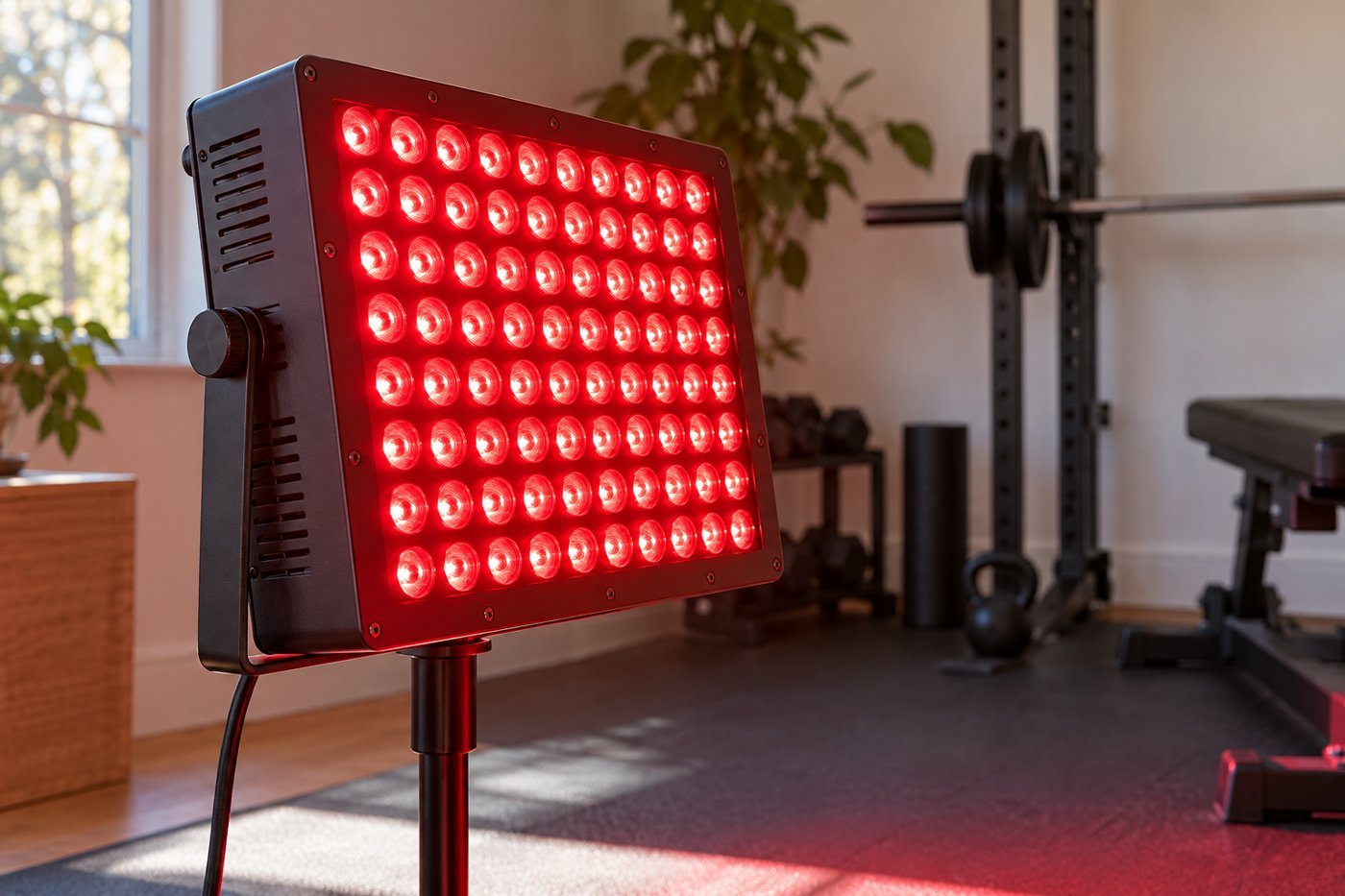
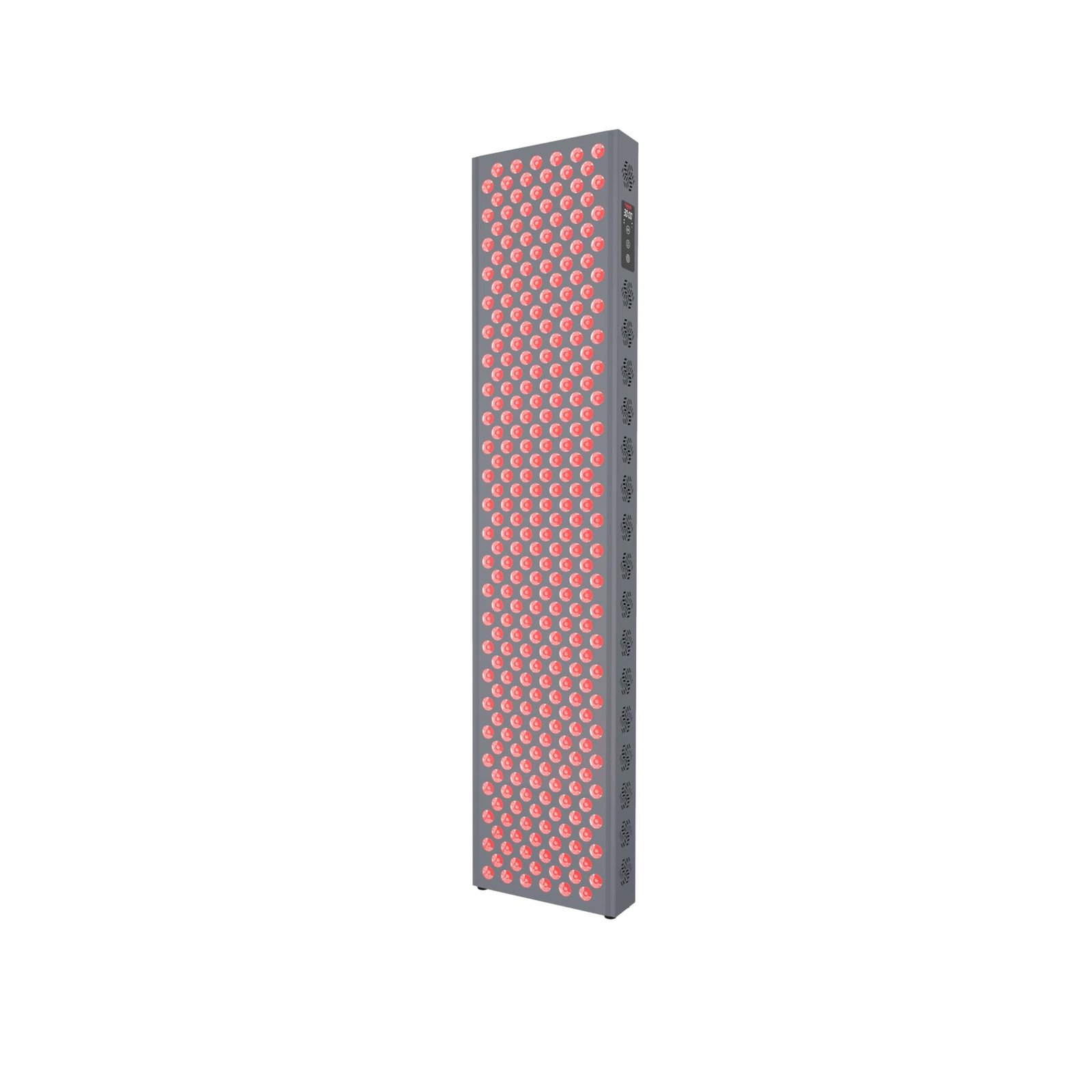
Start with the spot where the panel would actually stand or hang. Measure the available floor width, the distance you can comfortably leave in front of it, and the height the mount can reach. Check the dimensions of the panel with its base or stand attached. A tall housing may fit vertically while a stand base makes the setup awkward in a narrow room.
Use the manufacturer’s enclosure dimensions for fit and look for a separate coverage map for output. The dimensions of the housing describe how much room the unit occupies. They do not describe the size of the area receiving even output at your working distance. Where a coverage map is available, compare the area and the distance together. Where one is missing, note the gap rather than treating the face of the panel as the measured coverage area.
For a desk or countertop setup, look at what would hold the panel at the required height and angle without taking over your workspace. For a standing setup, check the mount’s adjustment range, how much space it takes on the floor and where the cord exits. An outlet on the wrong wall can make a setup you thought was easy inconvenient enough to stop using.
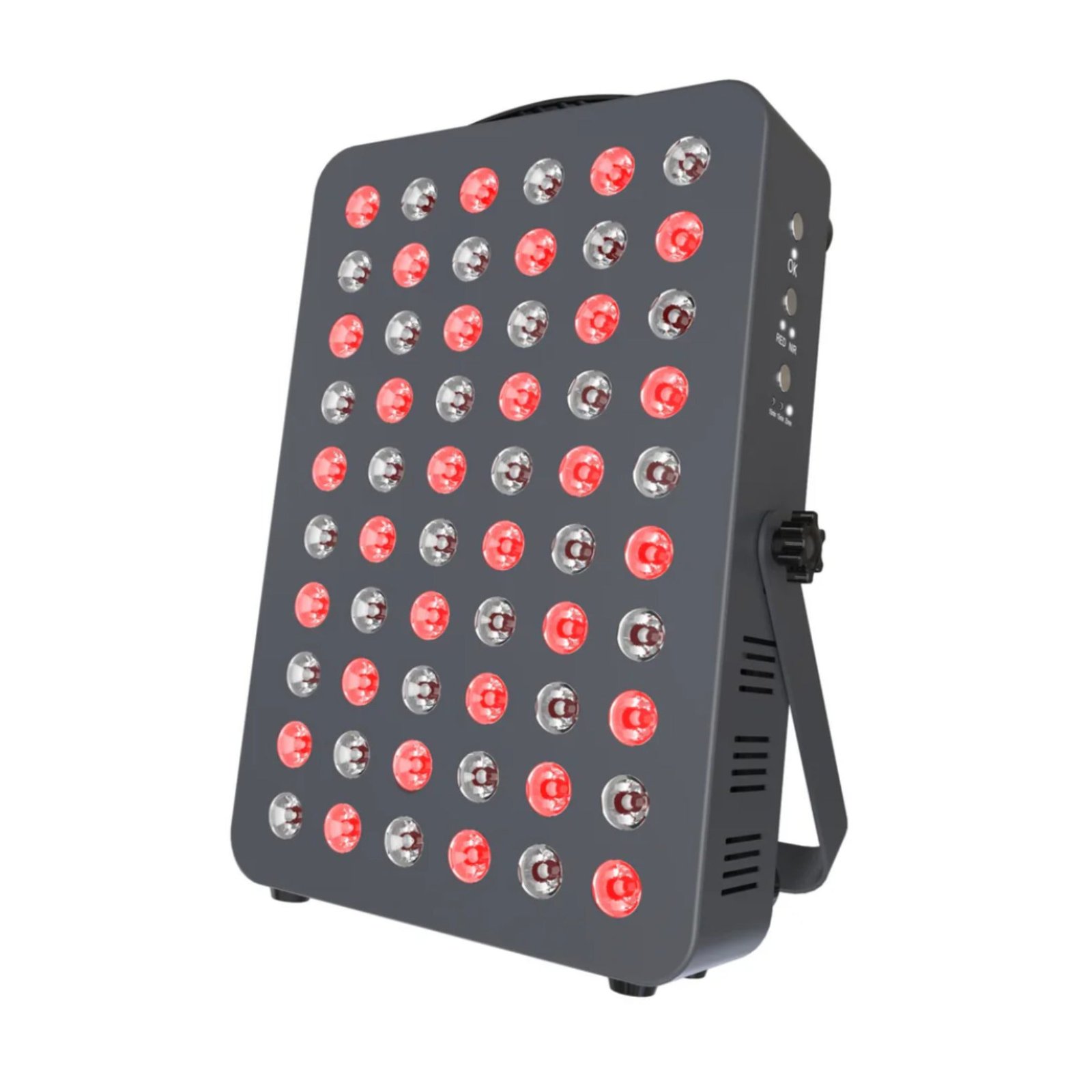
Compare a compact and tall red and infrared light panel against the same placement plan. A compact model can be easier to store, move and reposition. A tall model can simplify positioning when a compact panel would need to be moved several times. Those are practical tradeoffs. Neither format establishes how much light reaches a particular tissue or whether it helps with a particular concern.
Work out the actual cost of your setup
List the panel, the mount you would actually use, any required hardware, and the delivered price. Separate what comes in the box from what is sold as a bundle or pictured for demonstration. A panel advertised on a rolling stand may be priced without that stand. Open the specific variant in the cart and check the included parts before comparing totals.
Consider a hypothetical $450 panel that needs a $90 stand and $35 shipping. That setup costs $575 before tax. A $520 panel with a suitable included stand and free shipping costs $520 before tax. The higher sticker price wins on upfront setup cost in that example. The result changes if the included stand cannot reach the needed height or if you already own compatible hardware.
Do a separate calculation for returning the device. Ask when the return window starts, whether opened products qualify, whether you need the original packaging, and who pays freight. For a large panel, return shipping can be more consequential than it looks on the purchase page. Also check whether the panel and stand are covered by the same policy, especially when an accessory is bought separately.
Keep warranty and return terms in different rows. A return policy tells you what it costs to change your mind within the allowed window. A warranty tells you how a covered fault is handled, including whether you need to send the unit back and who pays for that shipment. A long warranty does not make a short trial period longer. Both matter when you are spending more to get a larger red and infrared light setup.
Decide what evidence would justify the purchase
Before comparing red and infrared light brands, write down the outcome that would make the purchase worthwhile for you. Then separate questions about using the hardware from questions about the expected outcome. Can you fit it in your room and select the intended mode? Does the source a seller cites actually investigate the outcome you care about? These questions need different evidence.
When a product page cites a study, open the study and check the device type, treatment area and comparator. Check whether the study measured the result you care about and when it measured it. A change in one outcome at a particular follow-up does not establish a result on every outcome or at every follow-up. If the study used a different device or settings, record that difference beside the claim.
Read the comparison group before interpreting a change. A before-and-after change can tell you what happened to the people receiving the intervention. A suitable comparison group helps you judge how much of that change might be attributable to the intervention. Also note whether the source is a laboratory output report or a clinical study. A careful laboratory report can help you compare devices, but it does not answer whether a buyer will get a clinical benefit.
Write down one reason to choose the product and one reason to walk away. For example, a buyer who values a repeatable setup might choose the panel with a documented mode and a mount that fits the room. They might walk away if the vendor cannot explain whether a cited study used the same equipment. If you cannot find a reason for paying more after making that list, the premium is still unexplained.
Finally, make the decision while looking at your own comparison notes rather than the order in which a product page presents its claims. Record which details came from the manual, which came from measurement, and which were simply asserted in the listing. This gives you a clean way to revisit the decision when you get an answer from a seller or when the exact model changes.
Frequently asked questions
Are red light and infrared the same? No. Red is visible; near-infrared is beyond the visible range. Consumer wording sometimes blurs that distinction.
Can I tell NIR output by looking at the panel? Visible brightness is not a reliable measure of NIR output. Use the documented mode and measurement information instead.
Is 850 nm automatically better than 660 nm? No. A wavelength comparison needs a target, delivery protocol and outcome; the larger number is not a quality score.
Should I choose red only or a combination? Start with the evidence for the intended use and the relevant device instructions. This guide does not establish one universal mode for everyone.
What to take into the buying decision
When comparing red and infrared light panels, keep wavelength, measured output and clinical evidence in separate columns. A good explanation should show what a specification means, how it was measured and what it cannot prove. When those answers are missing, more impressive numbers do not remove the uncertainty.
Research method: Prepared for Mike Tolentino, founder of Red Iron Peak. This guide draws on published research and device documentation. It does not include hands-on testing or medical advice. Product claims are distinguished from clinical findings. Read about Red Iron Peak. Sources checked November 4, 2026.