
We may earn money or products from the companies mentioned in this post.
Editorial update: November 1, 2026. The opening answer and author attribution were clarified. Product and study source-check dates remain as stated below.
Red light therapy for wrinkles has encouraging human evidence, including studies of home facial devices, but the size and reliability of the benefit depend on the device, protocol and outcome measured. It is reasonable to investigate for gradual cosmetic improvement; it is not reasonable to promise a facelift, a fixed percentage reduction or identical results from every panel.
The useful distinction is between a study that measured facial wrinkles with a defined device and marketing that turns any red-light study into a claim about any product. This guide examines that difference and explains how it changes a purchase decision.
On this page
Table of Contents
Red light therapy for wrinkles: what the research can support
| Evidence | What it adds | Main boundary |
|---|---|---|
| 2007 sham-controlled facial LED trial | Reported improvements in facial skin measures | Older trial; attrition and device specificity matter |
| 2014 controlled lamp study | Roughness and collagen-density measurements improved | Gas-discharge lamps; nonrandom untreated controls |
| 2025 home-mask crow’s-feet trial | Improvement on specified wrinkle scales versus sham | Specific device, population and follow-up |
| 2025 frequency trial | Some image-analysis and satisfaction outcomes improved | Blinded wrinkle-scale assessment did not separate groups |
| 2026 home facial-LED review | Encouraging synthesis across eight studies | Varied protocols and limited comparative evidence |
The rows should not be added together as independent new populations: reviews can include trials listed separately. The strongest conclusion is narrower than “red light reverses aging.” Some treatments improved specific cosmetic outcomes in specific studies.
An older facial LED trial: useful, but not a universal promise
Lee and colleagues’ 2007 trial compared red LED, near-infrared LED, a combination and sham treatment. It used a split-face approach and reported improvements in wrinkle and elasticity measurements, alongside tissue observations.
The study does not establish a result for every device sold today. The evidence-bank review identified 112 enrolled participants and 76 completers, with dropouts excluded from the final analysis. Attrition can change how confidently a result applies to the group originally enrolled.
Published maxima sometimes appear in advertising as if they were average improvements beyond placebo. They are not interchangeable quantities. We do not repeat a headline wrinkle-reduction percentage as your expected result.
The practical lesson is to read the comparator, final analysis population and measured outcome before accepting a number. A specific trial can be encouraging while still leaving important questions unanswered.
Red light therapy for wrinkles is not the same as a lamp study
The frequently cited Wunsch and Matuschka study from 2014 used large-area gas-discharge lamps rather than LED masks. It reported improved roughness and ultrasound collagen-density measurements after a defined course.
The untreated control group was not randomized and included company employees. Equipment-provider support and investigator remuneration were disclosed. Those features limit the strength of an inference about what would happen with a different commercial facial device.
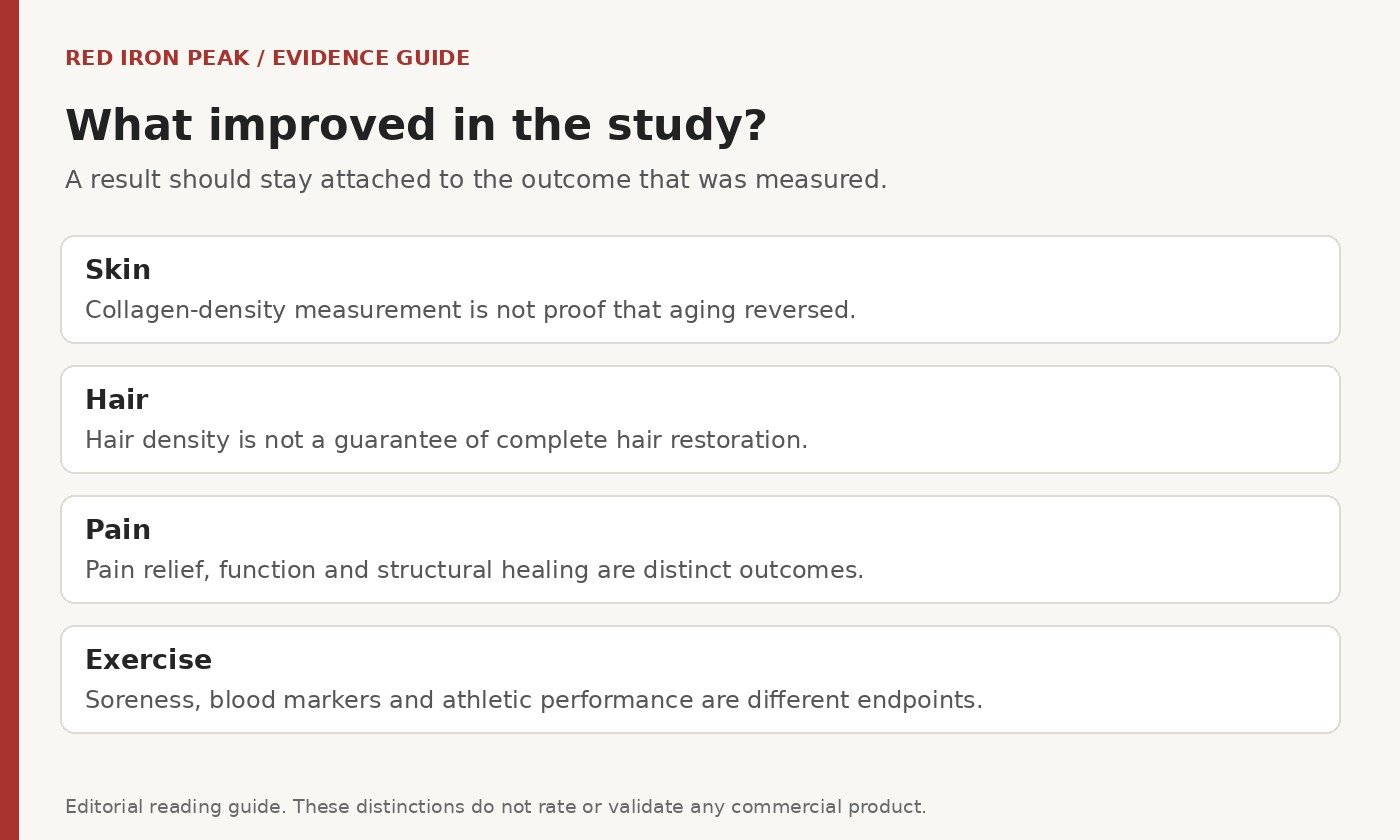
Collagen-density measurements are also not identical to a visible wrinkle change that matters to a buyer. Both can be relevant, but the outcome should remain attached to its measurement rather than becoming a generalized claim of rejuvenation.
When a seller cites this study, ask whether it accurately describes the lamps and control group. Calling it a study of the seller’s mask or panel would misrepresent the research.
Red light therapy for wrinkles: newer crow’s-feet mask evidence
A 2025 multicenter sham-controlled trial enrolled 60 adults of Asian descent, aged 30–65, with specified crow’s-feet grades. It compared a home mask using red and near-infrared emitters with a sham device over 16 weeks.
Independent-rater and investigator wrinkle-scale results differed between groups at later assessment points. This is more directly relevant to a home facial format than a clinical body-laser study, but it still concerns the particular equipment and population tested.
The sham was not simply an identical mask emitting no light: its red output was reduced and its infrared channel was absent. Details like this help interpret what “sham-controlled” means in the actual study.
We do not convert the trial’s success-rate reporting into a promised percentage reduction in your wrinkle depth. A responder definition, a scale change and a cosmetic percentage are different endpoints.
Red light therapy for wrinkles: mixed findings in a 2025 trial
A separate randomized frequency trial studied 95 women aged 45–60 using a red LED mask. It compared two active schedules with sham treatment over four weeks.
Some image-analysis wrinkle-length measures and satisfaction outcomes favored active treatment. However, the blinded specialists’ Wrinkle Assessment Scale did not show significant differences between groups. The active schedules also did not clearly separate on the reported satisfaction and photographic outcomes.
That combination should remain visible. Saying only that the study “reduced wrinkles” leaves out the assessment that did not distinguish the groups. Saying the treatment did nothing would also oversimplify its findings.
For a buyer, this is a useful test of a review’s honesty: does it explain which endpoint improved and which did not? Mixed endpoints should not be collapsed into a blanket certainty claim.
Red light therapy for wrinkles: what the 2026 review adds
An October 2026 systematic review of at-home LED facial rejuvenation included eight studies and 365 participants. It reported improvements in several facial-aging measures and generally mild, infrequent reported adverse events.
The authors also identified varied treatment protocols, limited comparative data and underrepresentation of diverse skin types. Those limitations prevent a confident ranking of every home device or a universal exposure schedule.
We reviewed the abstract and bibliographic record, not a complete independent audit of every underlying trial. A systematic review helps organize the evidence; its label alone does not eliminate limitations in the studies being summarized.
The result supports cautious interest in the studied home facial devices. It does not establish that the brightest panel or the product with the longest wavelength list gives the best cosmetic result.
Masks, open panels and clinical equipment are different choices
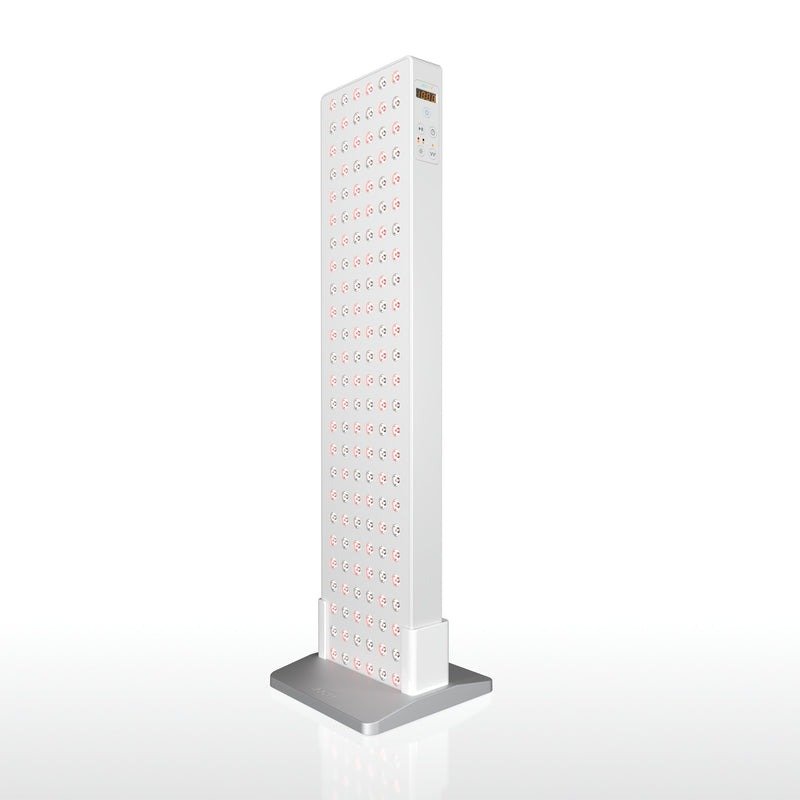
A purpose-built facial format and an open panel create different positioning problems. A worn device depends on fit and the permitted contact arrangement. An open panel depends on stable distance, angle and the part of the face directed toward it.
A larger panel is not automatically a more precise facial treatment, and a mask is not automatically effective merely because it is shaped for the face. Look for relevant evidence, the exact instructions and a usable routine.
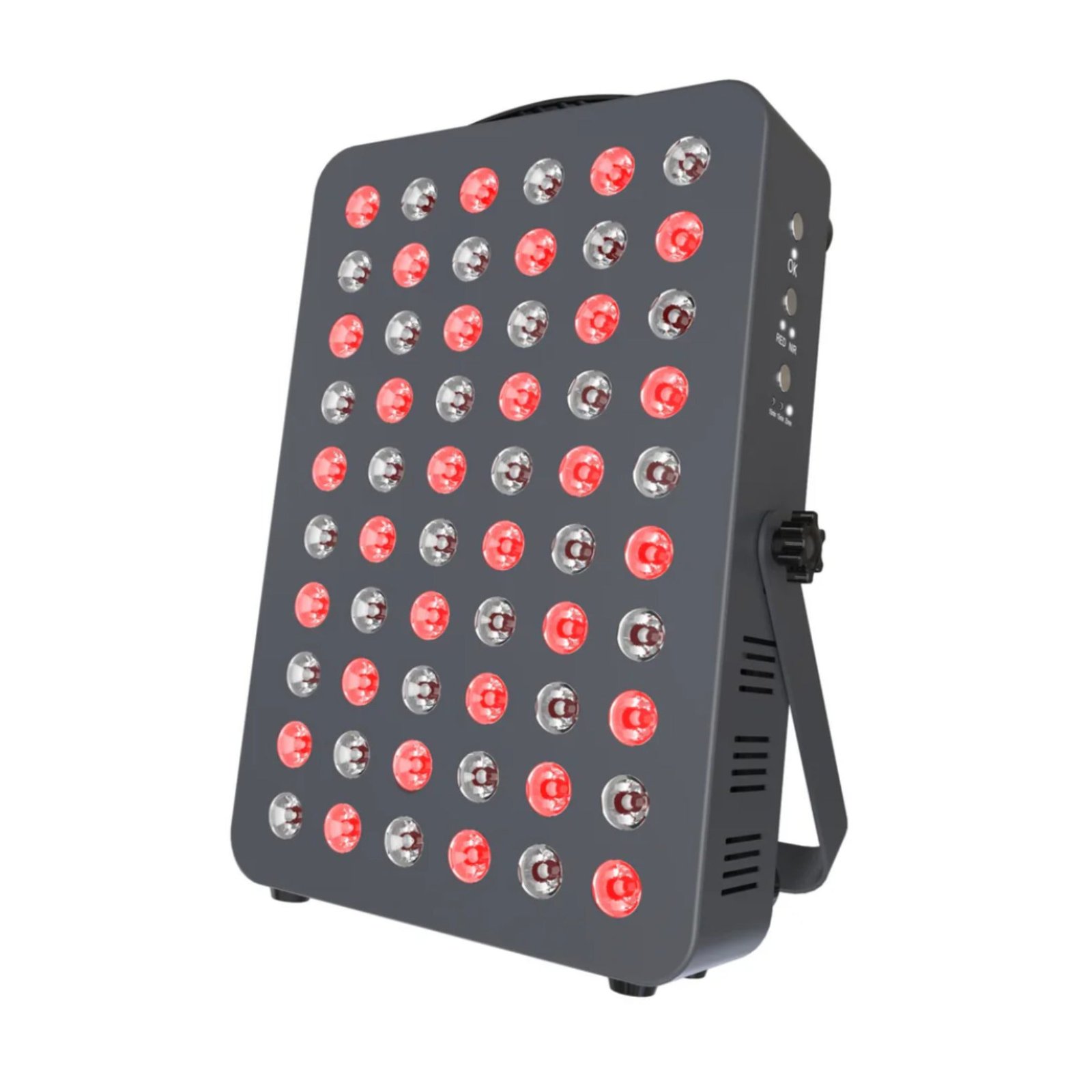
Our face-device comparison covers equipment choices. The product images in this guide illustrate formats; they do not identify the equipment used in the clinical trials unless explicitly stated.
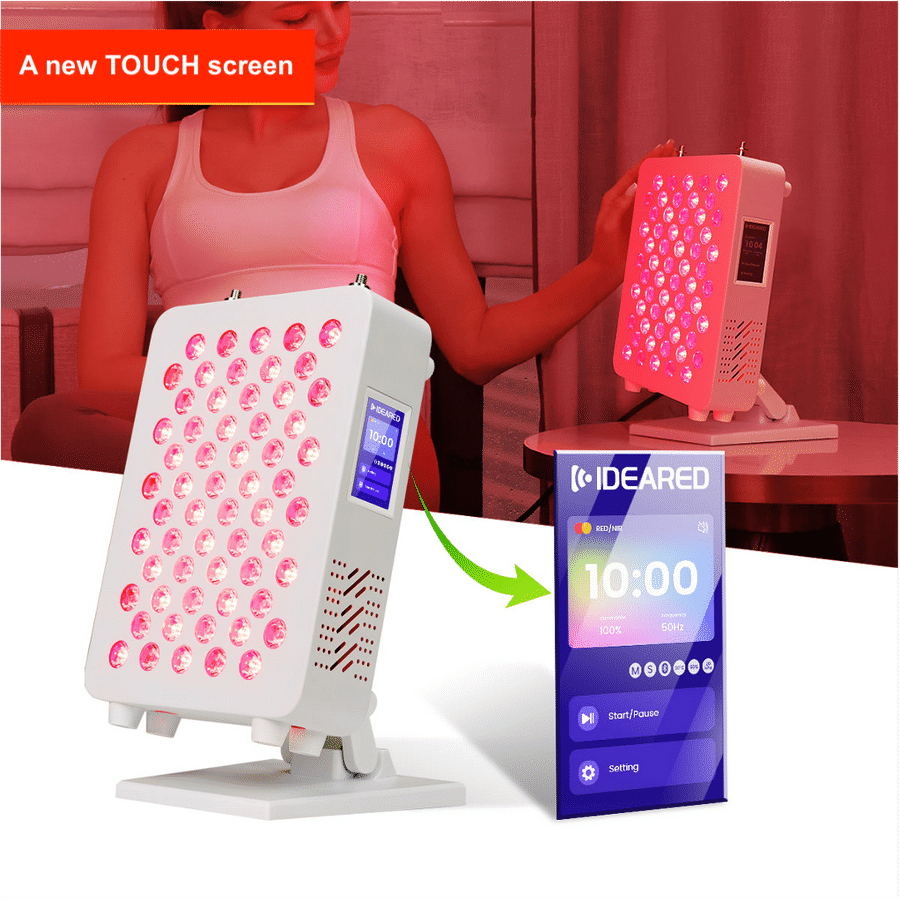
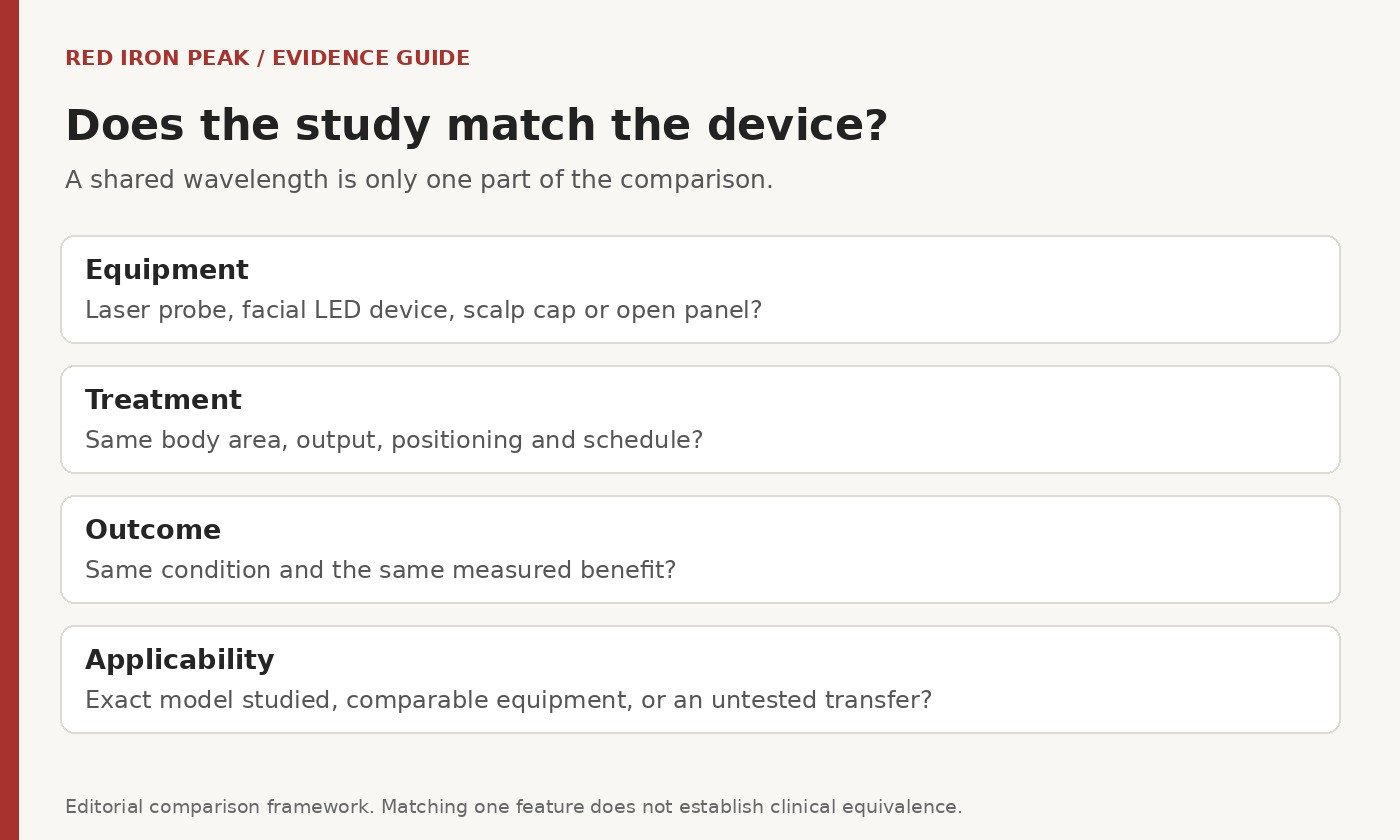
Ask what a seller means by “clinically studied.” It could mean the exact model was tested, or only that a wavelength or the broad treatment category appears in research. Those are materially different statements.
Timelines for red light therapy for wrinkles
The studies above assessed defined courses lasting weeks to months, with particular follow-up periods. A trial’s assessment date tells you when investigators measured the participants; it is not a guaranteed deadline for a personal result.
Be wary of a seller turning the earliest positive measurement into a promise that everyone will see a change by that date. The group, endpoint and comparator still matter. So do missing participants and whether improvements persisted after treatment ended.
A useful question for a clinician or manufacturer is how results should be assessed for the exact device and intended use. “Keep using it until something happens” is not a clear assessment plan.
Do not extend exposure or add sessions to compensate for a lack of visible improvement. Follow the appropriate instructions; more time is not established as a universal route to a better result.
Before-and-after photos need consistent conditions
Skin photographs can change with lighting, camera distance, facial expression, makeup and image processing. An attractive comparison image on a sales page is not enough to establish causation.
If you track your own appearance, use comparable conditions and retain the originals. Do not select only the most flattering later picture. A personal record can help a discussion with a clinician, but it does not become a controlled trial.
Also account for simultaneous changes. Starting a new skincare treatment, changing makeup and using light at the same time makes attribution harder. A device review should not silently credit every improvement to the light.
We do not publish fabricated before-and-after skin images or claim the product photographs on this page demonstrate a treatment response.
What to check before buying red light therapy for wrinkles
- Exact model and intended use, rather than a general brand claim.
- Relevant human evidence and the equipment actually used.
- Fit or positioning requirements that you can follow.
- Accessible instructions for exposure and eye protection.
- Complete cost, including accessories and return deductions.
- A realistic assessment plan rather than a guaranteed outcome.
Do not pay for a regulatory badge without checking what it means. FDA registration and listing do not establish approval or clearance. Any clearance claim needs the exact model and intended use.
A seller may provide technical reports, reviews and testimonials. Each answers a different question. Output measurements do not establish a visible cosmetic benefit, and a testimonial does not determine the expected average result.
Safety questions for red light therapy for wrinkles
Use the protection and directions specified for the exact device. Do not assume that advice for a different mask or panel applies to yours, or that closing the eyes replaces protection required by the instructions.
Discuss suitability before treatment if you have a relevant eye condition, light sensitivity, a suspicious lesion or medication concerns. For darker skin tones and pigmentation concerns, individual dermatology advice can be especially useful; the 2026 review identifies limited representation of diverse skin types rather than proving equal results across them.
Short-term tolerability in a small study is not proof of unlimited long-term safety. Stop and seek appropriate advice for a concerning reaction rather than interpreting irritation as evidence of effectiveness.
Our home-setup guide explains equipment checks without prescribing a universal routine.
Red light therapy for wrinkles: frequently asked questions
Does red light therapy for wrinkles work?
Some human trials report improvements in specific facial outcomes. The evidence is encouraging but varies by device, protocol and assessment. It does not establish identical results for every product.
Does collagen change prove red light therapy for wrinkles works?
No. They are related research questions but different measurements. Read what the study actually assessed instead of substituting a broader cosmetic claim.
Can red light therapy for wrinkles guarantee a percentage improvement?
No. Trial maxima, responder rates and average differences beyond sham cannot be interchanged. This guide does not promise a personal percentage.
Is a more powerful panel better for red light therapy for wrinkles?
A higher advertised output does not establish superior wrinkle outcomes. Relevant comparative human evidence would be needed for that claim.
How quickly does red light therapy for wrinkles show results?
The trials used defined courses over weeks or months. Their assessment points are not a universal personal timeline or permission to increase exposure.
Did Red Iron Peak test red light therapy for wrinkles on skin?
No. This is a research-based evidence guide. Product photos illustrate formats; no personal testing, clinician review or measured skin response is claimed.
Red light therapy for wrinkles: how to judge your own result
A personal trial cannot reproduce a blinded clinical study, but it can avoid some common sources of confusion. Decide what you want to assess before beginning. “My face looks better” combines wrinkles, redness, hydration, lighting and mood into one impression. A narrower question about a particular facial area is easier to discuss and document.
Keep the photographic comparison consistent
Use the same camera, lens, position and lighting for each photograph. Keep facial expression consistent: crow’s feet during a smile and lines at rest are different observations. Avoid comparing a close, sharp image with a softened image taken farther away. Beauty filters, portrait processing and changed exposure settings can overwhelm subtle differences.
Take photographs before judging the result rather than selecting only the most flattering frame afterward. Retain the original files and dates. Consistent pictures improve the record, but they still do not establish causation. Normal variation, skin-care changes and expectations remain possible explanations.
Document other changes
Record changes in moisturizers, sun exposure, cosmetic procedures and other relevant treatments. Do not interrupt appropriate care to make a comparison cleaner. Instead, acknowledge that several changes at once make it difficult to attribute an effect to a particular device.
The same principle applies when reading testimonials. A person’s satisfaction can be sincere while the cause of improvement remains uncertain. A photograph with no information about the interval, other treatments or capture conditions has limited evidential value. It should not carry more weight than a controlled study simply because the difference looks dramatic.
Choose the appropriate assessment
A wrinkle scale, a measurement of wrinkle length and a satisfaction rating answer different questions. The mixed findings in the frequency trial illustrate why that matters. A positive result on one measure does not imply a positive result on every measure, and the absence of a difference on one scale does not erase all other observations.
For red light therapy for wrinkles, agree on realistic priorities before comparing expensive devices. Is the goal a modest cosmetic change, a particular facial area or professional assessment of a broader skin concern? Those priorities affect which evidence is relevant. A panel designed for another body area should not inherit the evidence for a fitted facial mask.
Review cost and convenience alongside uncertainty
Consider the time needed to follow the exact product instructions, maintain the equipment and keep a record. Compare that burden with your budget and the uncertainty of the expected benefit. An affordable routine that you can follow safely may be more sensible than a sophisticated device whose operating requirements do not fit your life.
Read return conditions before treating the purchase as an experiment. A return window is a commercial policy, not a scientifically established time to assess wrinkles. A study’s follow-up period also does not guarantee that a buyer will see the same result within that interval. Avoid promising yourself a visible change by a deadline.
Know when to ask for professional advice
Unexpected irritation, pain or a new skin change warrants attention rather than a longer session. Questions about a changing lesion or a diagnosed condition belong with a qualified clinician. Cosmetic expectations should never delay an appropriate assessment.
Our red light therapy for wrinkles conclusion remains measured: some controlled trials support improvements in selected outcomes, while other findings are mixed and device-specific. A careful personal record can help you judge whether a purchase meets your own priorities. It cannot turn an uncertain result into proof that a whole product category works, or that one commercial model reproduces a published trial.
What a stronger wrinkles study would establish
When reading a new study, start with the people and the exact outcome rather than the conclusion’s most favorable phrase. Ask which facial area was assessed, whether lines were measured at rest or during expression, and which scale or instrument was used. Those details determine how closely the findings relate to the result you want.
Next examine the comparison. A sham device can help separate expectations from an effect of the active treatment, but its light output and appearance matter. An untreated group answers a different question. Neither comparison should be silently described as the other when summarizing the evidence.
Check how many people began and how many contributed results. People who discontinue may differ from those who finish. Attrition does not automatically invalidate a study, but an analysis based only on completers should not be presented as though every enrolled participant achieved the reported result.
Look for the planned primary outcome and the other outcomes reported. If many measures are assessed, highlighting only the positive one creates a distorted impression. The frequency trial’s mixed findings are a practical reminder to preserve both favorable and unfavorable endpoints in an evidence summary.
Read the follow-up period separately from the treatment period. A result measured shortly after a course does not establish how long it lasts without continued use. Likewise, a trial that observes selected participants for several months cannot establish years of safety or maintenance requirements.
Funding and author relationships belong in the interpretation too. Industry involvement does not by itself make a finding false. It does make transparent reporting, suitable controls and independent replication especially useful. We therefore retain those details when discussing the older lamp study rather than presenting it as a definitive home-mask trial.
For red light therapy for wrinkles, stronger evidence would also make the tested equipment and operating conditions reproducible. That still would not mean every device with a similar wavelength inherits the result. A careful review should explain the relationship between study device and commercial product, including when that relationship has not been established.
Our assessment of red light therapy for wrinkles
Red light therapy for wrinkles merits cautious consideration when the device and intended use match relevant human evidence. Keep the claim modest, identify the measurement and accept that mixed findings and unanswered questions remain.
Start with the face-device guide for equipment formats, and use the broader benefits review for other applications. Buying a panel and choosing a suitable cosmetic treatment are connected but separate decisions.
Checked November 1, 2026. Sources: Lee 2007 (PMID17566756), Wunsch/Matuschka 2014 (PMID24286286), the 2025 crow’s-feet mask trial (PMID39960921), Bragato 2025 (PMID40167796), and Das 2026 (PMID42875609), linked beside the relevant findings. We used the curated evidence bank and current PubMed records; several new sources were assessed at abstract level. Exact funding and protocol details not verified are not presented as established. About Red Iron Peak.