
We may earn money or products from the companies mentioned in this post.
A $100 price gap makes these two panels look like an easy comparison—until you add a stand and sort out what their output figures actually mean. This Mito red light comparison looks at the MitoPRO 1500X and Hooga PRO1500: Mito offers more control options and six listed wavelengths, while Hooga offers a lower panel price and a simpler routine. The useful question is which differences you will actually use.
Quick verdict
- Choose the MitoPRO 1500X if you want app control, onboard dimming and more wavelength options, and those conveniences justify its higher listed price to you. They do not establish better treatment results.
- Choose the Hooga PRO1500 if you want red/NIR selection and a straightforward timer at a lower upfront price. With the selected single-panel stands below, its listed advantage shrinks from $100 to $40.
- Do not choose by the largest irradiance number. The available figures use different reporting methods, and older tests may concern different hardware revisions.
Our method: We prepared this Mito red light comparison from documents and research, not hands-on testing. Product and policy details below come from the source research dated October 27, 2026; we have not independently measured either panel or inspected Mito’s underlying lab report. Prices and terms can change.
In this comparison
Mito red light comparison: the exact panels
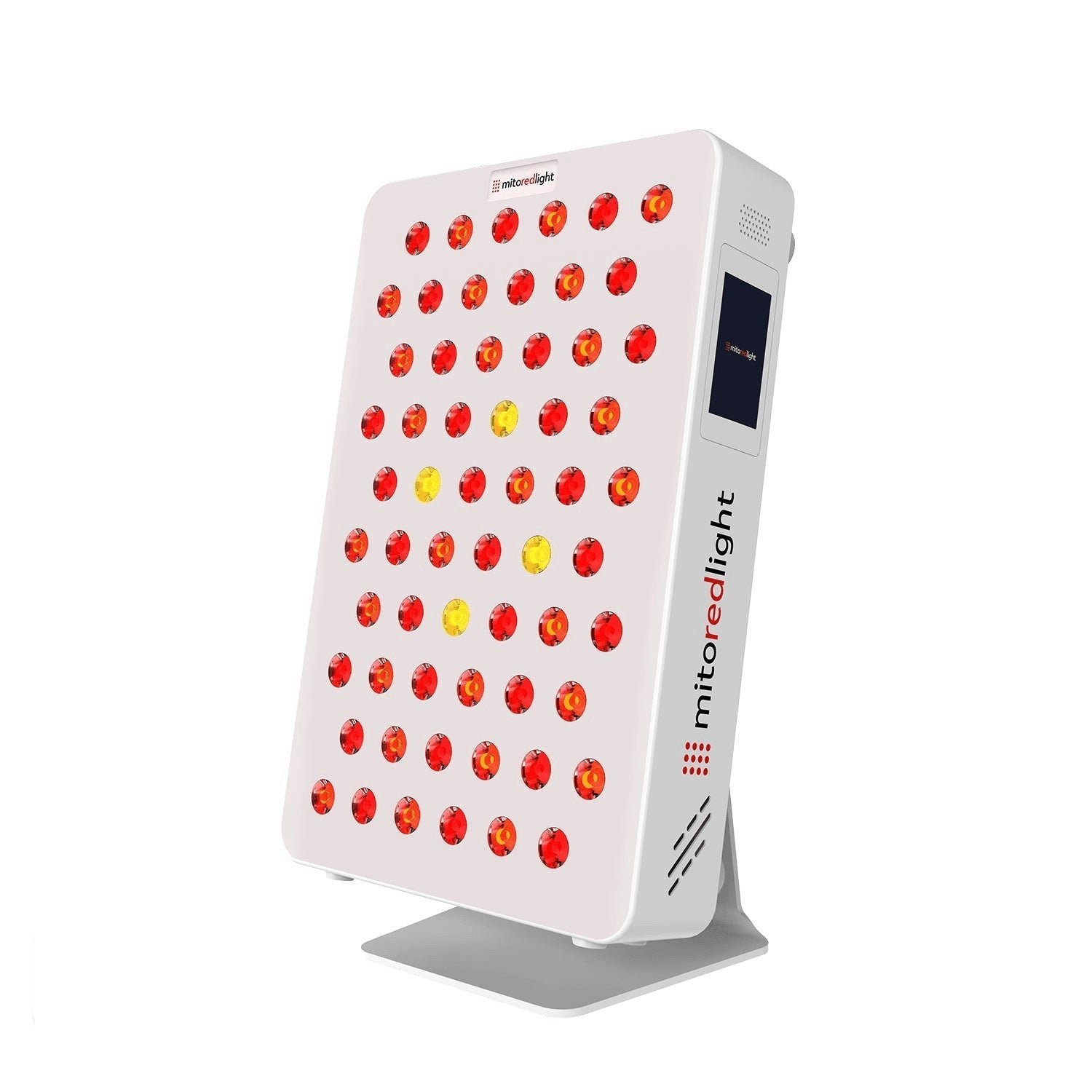
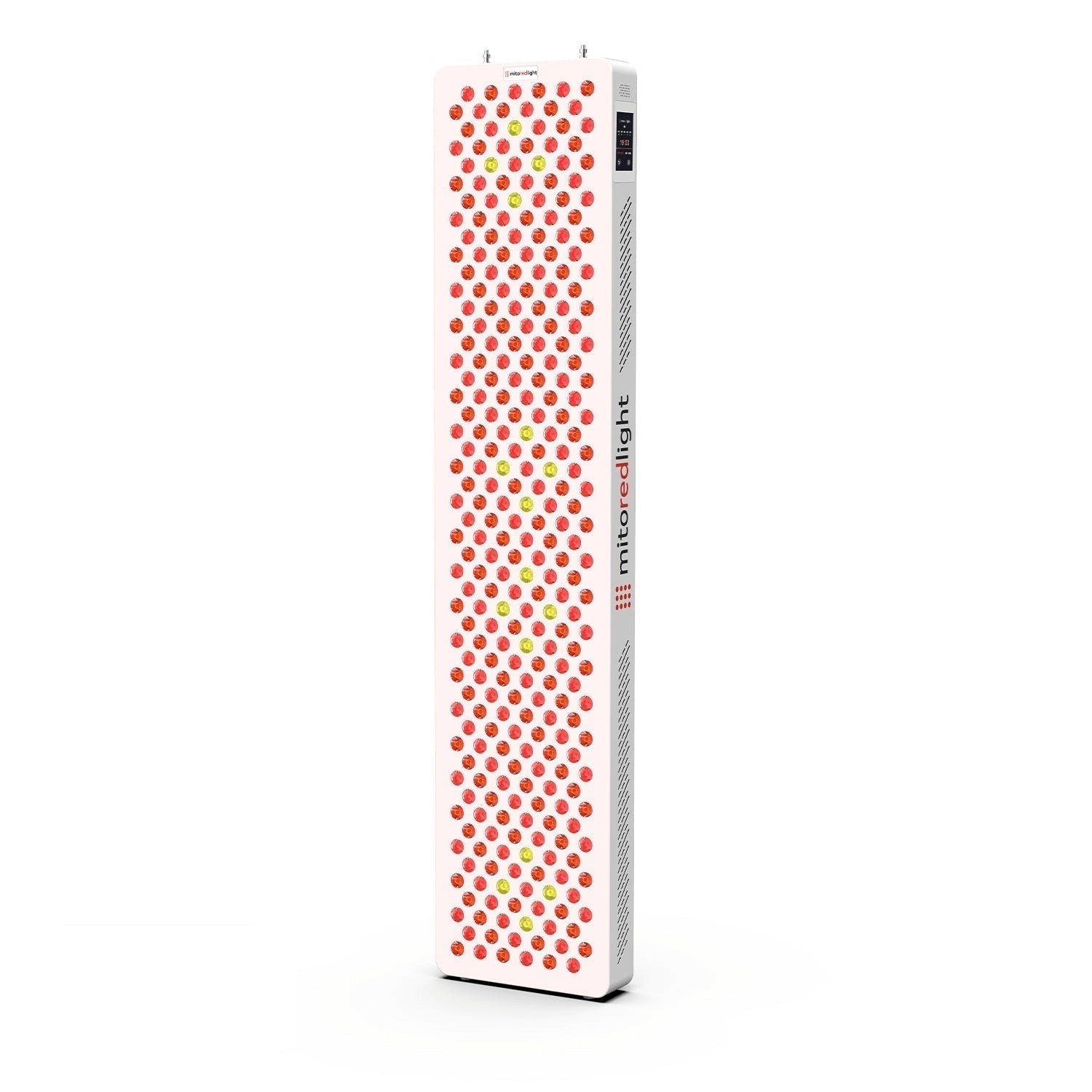
We are comparing the MitoPRO 1500X with the Hooga PRO1500. The Mito page sells several sizes, so select the 1500X before checking price. The Hooga HG1500, ULTRA1500 and PRO1500 are different products; the MitoPRO 1500+, MitoPRO 1500X and MitoADAPT are also separate models.
That distinction matters because Hooga’s own brand comparison positions the ULTRA1500 against the 1500X. Our comparison asks whether Mito’s extra features justify spending more than you would on the simpler PRO1500. It is not a claim that the brands place these panels in identical product tiers.
| Feature | MitoPRO 1500X | Hooga PRO1500 |
|---|---|---|
| Listed panel price (Oct 27, 2026) | $1,299 | $1,199 |
| Listed wavelengths | 590, 630, 660, 810, 830 and 850 nm | 660 and 850 nm |
| LED description | 300 lenses / 600 chips | 300 dual-chip LEDs |
| Listed dimensions | 43 × 10 × 3 in (manual) | 36 × 8.6 × 3.1 in |
| Listed weight | 25 lb; manual labels this gross weight | 21 lb; net/gross basis not stated |
| Controls | Touchscreen, dimming and Bluetooth app | Red/NIR selection and 5/10/15-minute timer |
| Pulse | Optional 10 Hz NIR in January 2026 manual; confirm current revision | No, according to brand FAQ |
| Door-hanging hardware | Included according to documentation | Included, with adjustable pulley kit |
| Panel warranty | 3 years, subject to policy | 3 years, subject to policy |
| Return window | 60 days from receipt; conditions apply | 60 days from delivery; conditions apply |
This Mito red light comparison uses dated manufacturer specifications, not our measurements. LED counts and weight labels are not necessarily reported on an identical basis. Confirm the exact model, configuration and current terms before ordering.
Mito red light comparison: complete setup costs
At the listed prices recorded on October 27, 2026, the Hooga panel costs $100 less. That is a meaningful difference if you will use the included door-hanging hardware. A stand changes the calculation, and the two least expensive stands are not identical products.
| Setup before tax | MitoPRO 1500X | Hooga PRO1500 |
|---|---|---|
| Panel with included door-hanging hardware | $1,299 | $1,199 |
| Panel plus selected single-panel stand | $1,299 + $139 = $1,438 | $1,199 + $199 = $1,398 |
| Panel plus selected larger stand | $1,299 + $349 = $1,648 | $1,199 + $299 = $1,498 |
| Shipping and tax | Confirm destination and checkout total | Confirm destination and checkout total |
The first stand comparison uses Mito’s $139 MitoPRO X Floor Stand and Hooga’s $199 Compact Stand. Mito says its stand holds the panel four inches off the floor; height adjustability was not verified in the research. Hooga lists an adjustable panel-top height of 43–67 inches. Neither that difference nor the $40 price gap tells you which arrangement fits your chair, body position or room.
The larger-stand totals use Mito’s $349 Universal Stand and Hooga’s $299 Vertical Stand. Their capabilities are not necessarily equivalent; confirm compatibility.
Mito advertises free lower-48 shipping; Hooga advertises free US shipping over $100 but also refers to checkout-calculated charges. Confirm destination shipping and tax. Totals exclude discounts, expedited shipping and optional protection.
Mito red light comparison: controls and daily use
Mito’s touchscreen, dimming and Bluetooth app are its clearest practical distinction. If you want to adjust brightness, keep a session record or use app features, these are specific conveniences to weigh against the premium. We have not tested the app’s reliability or ease of use.
The January 2026 MitoPRO X manual describes optional 10 Hz NIR pulsing in certain modes. However, the research found conflicting descriptions of the NIR-only timer limits. Confirm the current hardware, firmware and mode limits if a particular function is essential to you. A documented pulse option is not evidence that it improves an outcome.
Hooga’s current documentation describes red-only, NIR-only or combined operation and a digital timer. It does not offer Mito’s app or dimming. That can be an acceptable tradeoff if you prefer fewer settings, although buyers who need brightness control should pay attention to its absence.
The button opens the Hooga brand homepage, not the PRO1500 product page. Select the exact PRO1500 model before checking its current price and package.
Mito red light comparison: six wavelengths versus two
Mito lists amber, red and near-infrared bands across six wavelengths; Hooga lists 660 nm red and 850 nm near-infrared. Mito therefore offers a broader menu of light settings. What the available research does not establish is that this exact six-wavelength panel produces better results than this exact two-wavelength panel.
The research’s searches of PubMed, Europe PMC, ClinicalTrials.gov and the web did not locate an exact-model clinical study for either panel. That is a statement about the sources searched, not proof that no study exists. We do not transfer findings from other devices based only on matching wavelength labels.
Features such as dimming and app control can justify a personal preference; a longer wavelength list alone does not establish better results. For smaller devices, see our compact face-panel comparison.
Mito red light comparison: output claims
Irradiance measures power reaching an area, commonly expressed in mW/cm². A useful comparison also needs the measurement distance, instrument, sampling area, operating mode and whether a figure is a peak or an average. Two numbers can share units without measuring the same thing in the same way.
On its published test-data page, Mito reports commissioned LightLab results for a 1500X entry: 53.5 mW/cm² average and 72.5 peak at six inches, with 418.7 W wall draw. These are Mito-reported results from commissioned testing; we have not obtained or inspected report LLIA002765-006. The research also flags differences between that table’s model description and the six-wavelength product specification.
Hooga publishes 189 mW/cm² at six inches, among other distances, without naming the instrument on its product chart. A competitor-brand comparison page is not a substitute for the exact test method. We therefore do not divide the figures to claim Hooga is several times more powerful, or treat Mito’s documentation as proof of better clinical results.
Mito’s test material distinguishes original and “2025” 1500X versions. A 2023 Hooga review concerns a unit without today’s timer. Older measurements therefore cannot establish the performance of today’s exact units.
Mito red light comparison: rated watts versus power draw
Hooga’s 1500W rated figure comes from the summed LED rating, not a verified measurement of power at the wall. Its product specifications list 530 W consumption, while another brand page gives a different figure. Mito lists 445 W consumption; its commissioned-test summary reports a lower measured wall draw. Without comparable current-unit measurements, we cannot rank energy efficiency.
Electrical input, optical output and clinical effectiveness are different quantities. Our home-panel buying guide covers alternatives.
Mito red light comparison: size and mounting
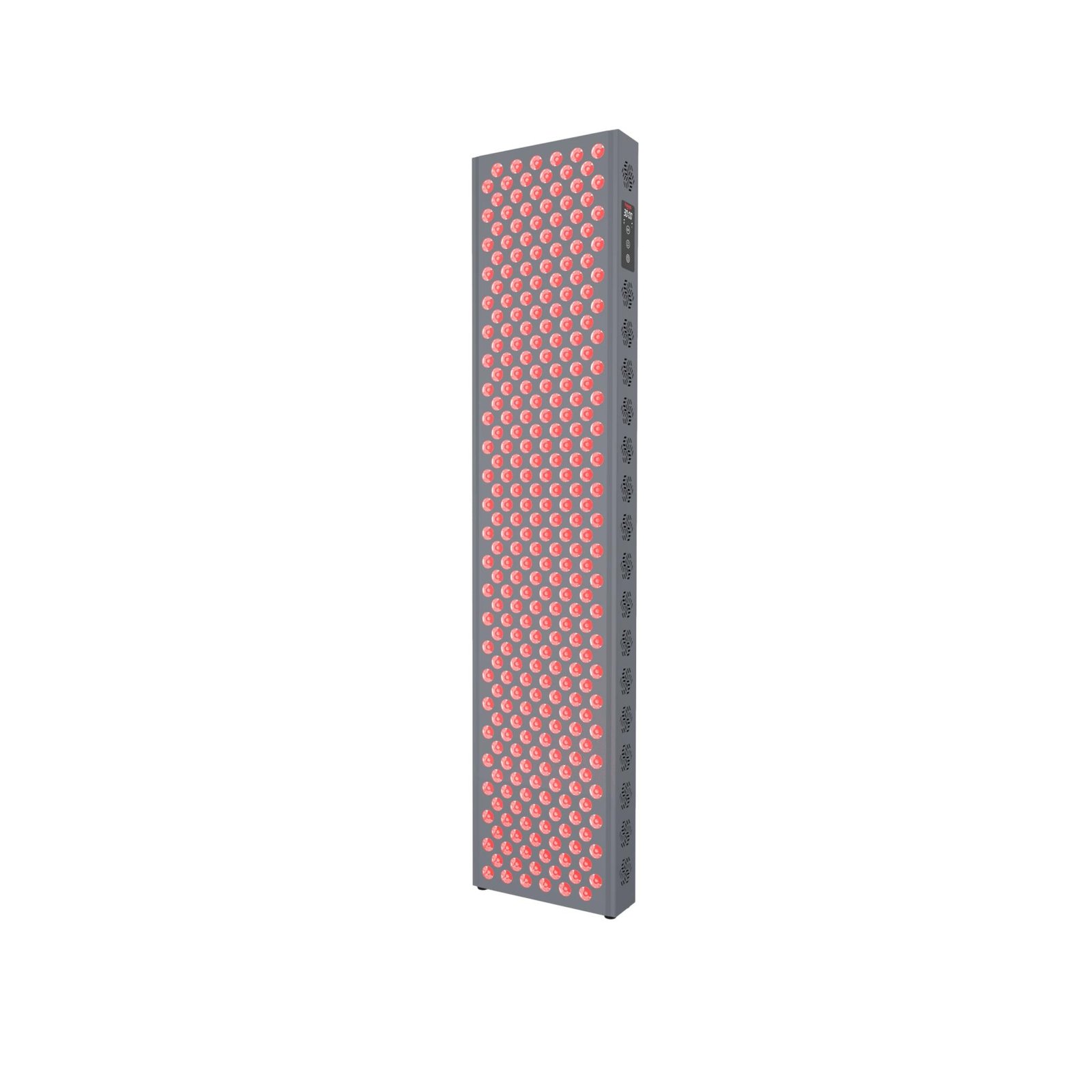
Mito’s listed panel is seven inches taller and 1.4 inches wider than Hooga’s. That tells you the physical dimensions, not the useful coverage of your intended position. Advertised coverage changes with distance, and neither a “full body” label nor LED count guarantees one-position coverage for every user.
Measure the stand footprint, mounting position, operating clearance and cable route. Check mounting load limits. Mito’s 25 lb figure is labeled gross weight; Hooga’s 21 lb figure does not specify that basis.
Mito red light comparison: warranty and returns
Both advertise a three-year panel warranty, but a warranty is not the same as a free trial. Mito’s policy starts coverage on delivery, limits it to the original purchaser and sets conditions on authorized purchases and shipping. The research found a difference between its manual and policy wording on warranty shipping, so confirm the applicable terms before relying on free transport.
Hooga’s warranty page gives three years for PRO panels and two for stands. Its page says coverage begins at purchase, while its manual says delivery. That start-date conflict should be clarified rather than quietly resolved in the brand’s favor.
| Return issue | Mito | Hooga |
|---|---|---|
| Window in cited policy | 60 days from receipt; postmark requirement | 60 days from delivery |
| Packaging | Original packaging required | Original packaging and condition required |
| Return transport | Buyer pays unless applicable optional protection was purchased | Return shipping deducted from refund |
| Other deductions | Certain shipping/protection fees not refunded; policy says no restocking fee | Restocking fee not stated in cited policy; damage/missing parts can affect refund |
The practical question is what it would cost to send a large panel back. Neither research entry gives a confirmed return-label dollar amount. Keep the box, read the current Hooga return policy or Mito policy, and save the terms that apply to your purchase. Optional protection may change the calculation, but its price was not verified here.
FDA status and electrical documentation
The research did not locate FDA clearance or approval for either exact model in the records searched. Mito’s own FDA listing includes the MitoPRO X Series. Registration and listing do not establish that FDA reviewed a panel’s safety or effectiveness; the FDA registration guidance explains the registration/listing process. We do not use an OEM model-name match to assert who manufactures Hooga’s retail panel.
Electrical documentation answers a different question. Hooga publishes certificates covering its PRO1500 model name for several compliance areas and says the finished panel is not UL or ETL listed. The research did not confirm those documents with the issuing lab. Mito states IEC 60601 compliance, but the research did not locate the underlying model-specific certificate or test report. That is an evidence limit, not proof that a panel is unsafe.
CE, FCC, RoHS, IEC compliance statements and a finished-product UL/ETL listing are not interchangeable approvals. If a particular certification is a purchase requirement, ask for the exact model, revision and supporting document. Follow the supplied instructions and eye-protection guidance; we do not give a universal treatment schedule here.
Mito red light comparison: who each panel suits
MitoPRO 1500X may suit you if…
- You want dimming and app controls and expect to use them.
- You prefer the additional wavelength options without treating them as a proven clinical advantage.
- You are comfortable clarifying the shipping revision, mode limits and documentation before purchase.
Hooga PRO1500 may suit you if…
- Your priority is a lower panel price and straightforward red/NIR controls.
- You do not need an app, brightness adjustment or pulse mode.
- Its mounting options fit your space and you accept the return-shipping deduction.
Neither is an obvious fit if you need a tabletop panel or a documented certification or clinical outcome these records do not establish. Our Joovv Solo 3.0 review covers a premium alternative.
Mito red light comparison: five checks before ordering
- Identify the model and revision. Get the manual for the unit that will actually ship.
- Price the complete position. Add the compatible stand or mount, destination shipping and tax.
- Clarify essential controls. Verify dimming, pulse and NIR-only timer behavior if they matter to you.
- Save the purchase terms. Record warranty start dates, return deadline, packaging requirements and transport charges.
- Resolve documentation requirements. Request the relevant certificate or test report instead of treating a badge as the underlying evidence.
Frequently asked questions
Is the MitoPRO 1500X worth $100 more than the Hooga PRO1500?
It may be if you want its app, dimming and additional wavelength options. At the dated panel prices the gap is $100; with the selected single-panel stands it is $40, although the stands differ. Those features do not establish superior clinical results.
Does the Hooga PRO1500 have an app or dimming?
The documentation reviewed for the research describes red/NIR selection and a timer, without app control or dimming. Do not transfer features from the ULTRA1500 to this model.
Why do the irradiance numbers look so different?
The published figures do not share a fully verified measurement method and hardware revision. Distance, instrument, sampling area and peak-versus-average reporting can change the result. We do not rank these panels by those headline numbers.
Are either of these panels FDA approved?
The research did not locate clearance or approval for either exact model in the records searched. An FDA establishment registration or device listing is not clearance or approval. We do not infer a verified indication from registration wording.
Does six wavelengths mean better results than two?
Not by itself. Additional wavelengths offer more settings, but the research did not locate a clinical comparison establishing better outcomes from these exact panels. Features and demonstrated outcomes should be evaluated separately.
Who pays if I return the panel?
Under the dated policies reviewed, Mito buyers pay return transport unless applicable optional protection was purchased; Hooga deducts return shipping from the refund. Confirm current charges and conditions before ordering.
Which panel takes less space?
Hooga lists the smaller panel dimensions, but the full footprint depends on the stand or mount and the required operating clearance. Measure the intended position rather than comparing panel height alone.
Mito red light comparison: our buying takeaway
This Mito red light comparison comes down to usable features and the complete purchase. Mito is the more flexible control option on paper; Hooga is the simpler, lower-priced panel. Pick the setup whose controls, space requirements and return terms make sense for you, and leave unverified performance advantages out of the decision.
Sources and research notes
Sources for this Mito red light comparison were researched October 27, 2026. Findings are not checkout quotes. Both product pages were opened during drafting, but every variant and policy was not rechecked. We did not inspect the commissioned lab report or verify certificates with their issuers.
- MitoPRO X product specifications and manual index.
- Hooga PRO1500 listing and PRO manual.
- Mito-published commissioned test summary and testing blog.
- Mito return/warranty policy; Hooga returns; Hooga warranty.
- Hooga certification documents; Mito FDA series listing referenced by the research.
About the author: Mike Tolentino, Red Iron Peak. Our comparisons distinguish published specifications from independent evidence and hands-on experience. This article documents research, not personal use of these panels.